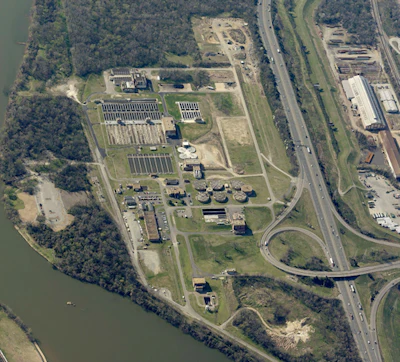
Last Jan. 6, a power failure at the City of Richmond’s main water treatment plant left residents and businesses without water for nearly a week in the dead of winter. An incident report from engineering firm HTNB found “several instances” of miscommunication among city staff, worsening the crisis and leading to the firing of Richmond’s Department of Public Utilities director.
 Illustration by Jess Raimondo
The two-hour response window remains a sticking point for some suppliers, said Richmond attorney Christopher Pomeroy, general counsel for the Virginia Municipal Drinking Water Association. The association, which represents some of the largest water utilities in Virginia, has balked at a bill that originally gave suppliers six hours to report major mechanical issues.
“This is infrastructure with complex management and operational requirements,” Pomeroy said. “Most utilities think this new rule is intrusive, and a burden in the initial phase of discovering equipment failure.”
The six-hour window was amended to two by Virginia Gov. Glenn Youngkin, with lawmakers voting in early April to adopt the recommendation. VDH released a two-hour reporting flow chart to aid utilities in the decision-making process – equipment malfunctions with “significant potential” to harm residents or result in widespread disruption of service fall under the deadline.
VDH defines “a widespread disruption” as a loss of water service to “500 or more service connections for waterworks with 5,000 or more service connections” or “10% or more of a waterworks’ service connections for waterworks with 500 to 4,999 service connections.”
In addition, the two-hour reporting period stands as a hard deadline for suppliers, noted Pomeroy.
“The solution might be a quick operational tweak, or it could be much more involved and intensive,” said Pomeroy. “Those issues might even be fixed in that (two-hour) time frame. So, from a compliance standpoint, I’ve got this clock ticking. If the problem hasn’t gone away past the two-hour horizon, one of my obligations is to alert the state.”
Out of the dark
The law, which into effect on July 1, has resulted in 163 two-hour reports through Nov. 12. Nearly 90 of these incidents fell outside legal requirements - a predictable symptom of growing pains as officials adjust to the new standards, said Pomeroy.
“The trend has been declining over time as people get familiar with the scope of the law,” Pomeroy said. “Some operations will err on the side of overreporting, rather than being second-guessed.”
HB 2749 was introduced by Virginia Del. Destiny LeVere Bolling, who represents the suburb of Glen Allen in Henrico County. The city-commissioned investigation found that residents in Henrico, Chesterfield and Hanover counties were not alerted to the full scale of the plant failure until “later in the afternoon” that day.
“The biggest communication breakdown was the delay and inconsistency in notifying residents and local partners about what was happening and what to expect,” LeVere Bolling said in an email. “Information came out in pieces, often after the fact, leaving families, hospitals, schools, and businesses in the dark.”
Many of LeVere Bolling’s constituents woke to dry faucets, having received no alerts to prepare them. The investigation also determined that Richmond’s DPU failed to inform the state’s office of drinking water until several hours after the crisis had already begun. (Richmond DPU and Henrico County did not respond to requests for comment on this story.)
LeVere Bolling’s legislation was spurred by conversations with frustrated residents during and after the incident, she said.
“My first thought was, how do we make sure this never happens again without warning?” said LeVere Bolling. “The bill was about putting clear requirements in place for how and when agencies must communicate water-related emergencies to the public and to one another. People can deal with inconvenience, but they can’t deal with being left in the dark.”
‘The primary benefit is trust’
The HTNB report found instances “of either miscommunication or misinformation among DPU and City staff members,” including text messages falsely claiming that the plant’s backup generators successfully kicked in after the power failure. The investigation also revealed that then- DPU director April Bingham waited nearly five hours after the shutdown to alert the city’s interim chief administrative officer of a potential service cutoff.
Bingham was fired from her post after withdrawing a resignation – in the fallout, policymakers including LeVere Bolling said a renewed commitment to transparency would help restore public confidence, she said.
“The primary benefit is trust,” said LeVere Bolling. “When residents get timely, accurate information, they can make safe decisions for their families. The current timelines are a step forward, but I do think we can look more closely at reporting infrastructure, public alert infrastructure and the notification window. We’ll need to keep evaluating the system as it’s implemented.”
Richmond attorney Pomeroy ultimately views HB 2749 as a “one-off” bill that should nonetheless improve the situation on the ground.
“Just from a state standpoint, there’s an excellent working relationship between regulators and utilities,” Pomeroy said. “This (legislation) forces some faster communication, but in critical situations, I think these communications are happening anyway.”