Florida utilities are running up against limits on how much groundwater they can withdraw, as drought conditions, population growth, and saltwater intrusion converge on the state’s primary water source.
The Floridan aquifer, which spans roughly 82,000 square miles beneath Florida and parts of the Southeast, has long supported the state’s drinking water supply. But declining recharge, increased demand, and environmental pressure are forcing water managers to place tighter controls on withdrawals and accelerate the search for alternative sources. Half the formation's fresh water is used to water private lawns, for starters, according to the Southwest Florida Water Management District, one of five regional WMDs in the state.
Florida’s supply is far from endless, thanks to overextraction, salt water intrusion and extreme drought.
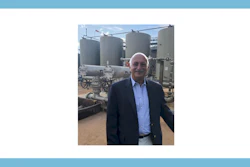
Drought has been the most prevalent issue lately, said district executive director Brian Armstrong. The 16-county area received below average precipitation during last summer’s rainy season, resulting in a 13.7-inch deficit compared to the average 12-month total.
Along with the worst drought conditions in years, the region is seeing ongoing declines in its rivers and lakes. This puts additional strain on an aquifer that needs more time to recover, said Armstrong, whose district serves Tampa Bay and the surrounding area.
“2017 was our last major drought, which put us into water restrictions,” Armstrong said. “El Niños and droughts are cyclical, meaning we need to adjust. That’s where you get restrictions and shortage orders.”
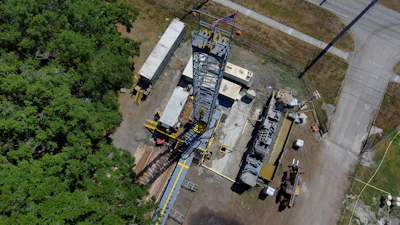
 New pipelines and production wells are set to provide alternative water sources for Florida residents in midst of aquifer shortages.SW FL Management District
District officials are hoping for a more active rainy season this year, which in Florida runs from mid-May to mid-October. The amount of precipitation stored depends on geology – recharge is faster in the northern part of the district, where the aquifer is closer to the surface. The district’s southern region faces a greater challenge, as the aquifer there is encased by thick layers of clay.
Considering the local appetite for lush lawns, Armstrong and his team are praying for rain this summer.
“If we target lawn watering (through restrictions), we’re targeting half of all local water use,” said Armstrong. “So if it rains and people don’t water, that’s a big help.”
In it together
Recent rainfall in the South Florida Water Management District allowed officials to rescind water shortage warnings in part of its 16-county jurisdiction. Conservation efforts from residents also helped local aquifers rebound to a safe level, said Jason Schultz, public information coordinator for the district.
While some warnings have been lifted, the district is asking residents to limit irrigation as Florida approaches its wet season. Even fixing leaks in sprinkler systems can conserve precious water, not to mention protect homes from damage, added Schultz.
Meanwhile, district administrators are managing a protracted dry spell together with tribal nations, local municipalities and the public itself.
“We continue to closely monitor salinity conditions, regional rainfall projections, community needs for sustained water supply, and water levels in critical areas,” Schultz said in an email. “In addition, dry conditions in south Florida highlight the reason for developing the storage components of the Comprehensive Everglades Restoration Plan. Storage features like the Everglades Agricultural Area Reservoir will provide the ability to store water in the wet season and hold it for drier times. These features make water available for beneficial use longer into the dry season and provide insurance against drier conditions.”
With support from the state, the district is helping municipalities fund reverse osmosis plants, irrigation system retrofits and other supply initiatives. Alternative sourcing remains vital, regardless of whether Schultz’s hopes for a robust rainy season materialize.
“We are committed to supporting the development of alternative water supply projects to supplement our limited underground water resources and address future demands,” Schultz said. “By identifying opportunities for water conservation and developing alternative sources, we can diversify our supply and reduce the demand on freshwater resources.”
Nothing lasts forever
Leaders in the Southwest Florida Water Management District said they will reassess their water situation in May, emphasizing aquifer levels, stream flows and lake capacity. The district is also weighing the cost of desalination and water reuse- in the case of reuse, officials including director Armstrong are striving to demystify “the human yuck factor.”
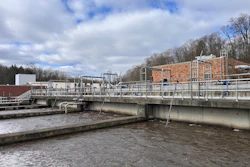
Plant City, Florida, is engineering a potable reuse system utilizing membrane filtration, reverse osmosis, and an ultraviolet/advanced oxidation process. A pilot conducted in 2023 met both current and pending water quality regulations, said Armstrong.
Cost will always be a factor when seeking options outside of groundwater. Like the desal process, reclaimed water costs about $15-$20 per thousand gallons to treat. To mitigate these costs, the district’s Cooperative Funding Initiative is financing up to 50% of water-related projects.
Ultimately, Floridians must understand that unrestricted groundwater pumping cannot last forever, Armstrong said.
“Everyone will have to realize that groundwater is going to be limited at some point,” he said. “We have to start thinking about alternative supplies. It’s not an easy lift, but it’s the future.”