In early June, Central Iowa Water Works issued a mandatory lawn-watering ban for 600,000 customers. Since then, regional water usage has fluctuated from a peak of 53 million gallons on June 18 to a low of 42.4 million gallons on June 21, according to the regional water authority.
Triggered by elevated nitrate levels in drinking water, the shutdown highlights the delicate balancing act utilities face when various operational pressures collide, said CIWW executive director Tami Madsen.
“When water quality deteriorates, it makes it challenging to treat water at the capacity the public demands,” Madsen said. “To meet safe standards, we have to reduce demand on the system, which is done through these different bans.”
The current crackdown will stay in place “as long as needed,” added Madsen. Bans of this nature are initiated by different factors, including line breaks or higher-than-normal pollution levels in Central Iowa’s three main water sources - the Raccoon River, the Des Moines River and an underground infiltration gallery.
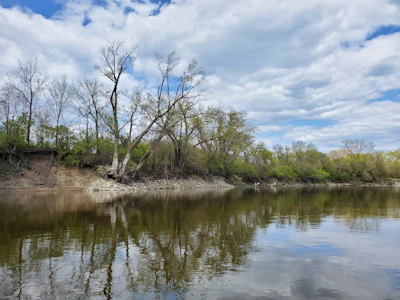
Between late May and mid-June, the Racoon River averaged 15.04 milligrams per liter of nitrate, with the Des Moines River clocking in at 10.78 mg/L, per lab results from CIWW. Both measurements surpass EPA’s safe drinking water standard of 10 mg/L. While drinking water is safe, the regional system is currently operating at the limits of its available treatment resources, said Madsen.
To manage high nitrate levels, CIWW is deploying its specialized removal facility alongside local reservoirs and aquifer storage wells. The Des Moines reclamation plant harnesses advanced aeration systems to break down nitrate into nitrogen and oxygen, which creates renewable natural gas. The remaining sludge, concentrated with nutrients, is dewatered and turned into a semi-solid fertilizer.
In the meantime, lawn watering is prohibited with exceptions for sports fields and golf courses, or seed planted during the current growing season. To further ease the strain, CIWW is urging residents to conserve water indoors by only running full dishwasher loads and turning off the tap while brushing their teeth.
In some ways, CIWW is still determining its overarching conservation strategy, added Madsen. Formed in April 2024, the production authority comprises Des Moines Water Works, Urbandale Water Utility, and ten additional municipalities and water districts.
CIWW recently launched a committee to identify best practices in managing peak water demand. To lower water usage for the long haul, the strategy integrates consumer education with real-time data analysis and technology improvements. Even before the ban, the authority provided practical tips for reducing water use while maintaining healthy homes and landscapes.
Nor does the work stop there: An Aqualytics initiative from CIWW utilizes predictive weather modeling and advanced landscape controllers to support water sustainability. Through this program, irrigation schedules are modified based on real-time weather conditions – together, these strategies can guide residents toward a more permanent climate resilience approach, said Madsen.
“We need to think about how we use water in the Midwest, and how we can change the mindset on that,” she said. “We can distribute smart irrigation meters that respond to the weather, or adjust sprinkler heads to not spray on sidewalks.”
In the public interest
Iowans are certainly interested in reducing pollution before it reaches their drinking water, said Sarah Green, executive director of the Iowa Environmental Council (IEC), the state's largest conservation coalition.
Residents have reached out to Green’s organization about technologies like reverse osmosis, which uses a special membrane to filter out nitrates and other contaminants. CIWW’s watering ban also underscores what the IEC has been warning about for years, said Green.
“Our nitrate problems are no longer an abstract issue,” Green said. “When source water has nitrate levels that are so high – and the regional utility has to ask 600,000 people to change how they use water – that becomes an immediate health issue.”
Water bans are a band-aid for what has become a systemic concern, said Green. To that end, the IEC is focused on addressing pollution at its source - an analysis of the Des Moines and Raccoon rivers found that more than 80% of the waterways’ toxic nitrates stem from industrial agriculture.
With synthetic fertilizers and factory farm waste driving widespread contamination, the EPA must protect Iowa’s drinking water through stronger enforcement of the Clean Water Act and, said Green.
“We’re not anti-agriculture at all, but we recognize that this is an issue requiring multiple groups to reach a solution,” she said. “Water quality is not a partisan issue when it’s impacting the health of every Iowan.”
Planning for the future
A recent Iowa Environmental Council and Harkin Institute report found that Iowa has the nation’s worst waterway nitrate contamination. Iowa also has the second-highest cancer rate in the nation, even if Green is hesitant to draw a direct line between that fact and the state’s use of the cancer-linked pollutant.
For now, the IEC supports mandatory water restrictions while traditional treatment systems are under strain. The state conservation group is also advocating for more preventative measures, including a real-time pollution monitoring network.
“We can’t manage what we don’t measure,” Green said. “The state needs to invest in these networks with transparent public reporting.”
Easing the burden on utilities means reshaping customer expectations around water consumption, especially when confronted by population growth, extreme heat or high-pollution events.
“Conservation shouldn't just happen when there is low supply, or in cases when water quality makes it difficult to keep up with treatment,” said Green. “Other parts of the country have strategies that have been tried, tweaked and vetted. We should use those to educate and take action on water conservation. At the same time, it’s difficult for utilities to tell customers to reduce water usage while agriculture and CAFOs (Concentrated Animal Feeding Operations) can operate without any restriction.”
To counter future supply uncertainties, CIWW authorized $1.2 billion in capital upgrades over the next 25 years to build capacity and resilience. Major projects include the expansion of two water treatment plants, as well as construction of a new treatment facility expected to add 12 million gallons per day by 2032.
Executive director Madsen said these measures are crucial to preserving treatment standards when raw source water quality declines.
“We know we have source water challenges – even with upstream partnerships with the state and agricultural producers, this is not a problem that will be resolved tomorrow,” said Madsen. “It will take years or decades to grow this. It’s a collaborative approach to ensure we have high-quality drinking water for Iowans to enjoy.”