California is mostly drought-free as of mid-2026, thanks to an active wet season that replenished the state’s water reserves. While reservoirs sit full today, officials in the city of Carpinteria are not allowing the present abundance to breed complacency.
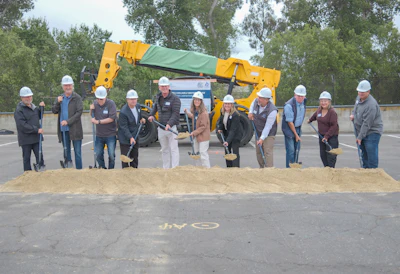
In May, the Carpinteria Valley Water District broke ground on a new recycled water initiative. Once completed in 2029, the $90.7 million Carpinteria Advanced Purification Project is expected to provide a quarter of the region’s water needs.
With future droughts an inevitability, it’s a matter of preparing now to thrive later, said water district general manager Kelley Dyer.
“We expect another drought someday,” said Dyer. “Part of the rationale for CAPP is having a local water source that’s available every year.”
A 12,000-square-foot purification facility on the Carpinteria Sanitary District campus will provide the region with 1.3 million gallons of purified water per day. Treated wastewater will be injected into the groundwater basin, then extracted as a “drought-proof” supply for 16,000 residents on California’s Central Coast, said Dyer.
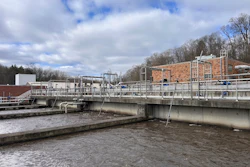
Under the current system, Carpinteria’s wastewater is treated at the sanitary district's existing plant before it’s discharged into the Pacific Ocean.
“This will be a reliable source that’s available rain or shine that will let us replenish our groundwater basin, and mitigate impacts of drought,” Dyer said. “We saw our surface water supply diminish during our last drought (2020-2023). To meet community needs, we relied on groundwater pumping, which reduced those levels to historic lows. We’ve had some wet years since then, but our groundwater levels have not recovered. This project will recharge our basin and increase our groundwater levels.”
Today, the water district draws the majority of its supply from the Cachuma Project, which captures and stores runoff from the Santa Ynez River in Lake Cachuma. The region is sustained further by groundwater from the Carpinteria Groundwater Basin, along with a State Water Project allocation of up to 2,000 acre-feet annually.
Outside water purchases are an option as well, albeit a costly and unreliable one, added Dyer.
“It depends on availability, but it can cost hundreds of dollars per acre-foot (during wet years),” said Dyer. “During drought years, you can be paying thousands per acre-foot.”
An ounce of preparation…
Carpinteria’s jointly managed water supply project was first proposed in 2016 - plans outlined a large-scale purification center, 10-inch pipeline, and two injection wells to deliver recycled water.
CAPP will cost roughly $90.7 million, including $73.3 million for construction and $17.4 million in related planning and permitting. California’s State Water Resources Control Board will provide $44 million - or about half the total cost - through a low-interest, $39 million loan from the Clean Water State Revolving Fund alongside a $5 million grant from the Recycling General Fund.
Though maintaining local reserves is a priority under Gov. Gavin Newsom’s Water Supply Strategy, such work is often cost prohibitive for smaller cities like Carpinteria, noted water resource board member Sean Maguire.
“Our funding made a difference in allowing Carpinteria to proceed with the project,” Maguire said. “We’re always looking for a sweet spot with funding to get these communities over the hill to reuse.”
With Newsom’s water strategy as a guide, the board continues to fund additional purification facilities driven by climate modeling that projects California will lose 10% of its total supply by 2040.
Adapting to hotter and dryer conditions means recycling at least 800,000 acre-feet of water annually by 2030, a benchmark the governor’s office aims to boost to 1.8 million by 2040. A lofty goal, yet a necessary one to hold back the pending crisis, Maguire said.
“We can’t count on the old model of hoping the existing infrastructure will hold for the next drought,” he said. “So, we need more projects like Carpinteria’s to build that resiliency and take pressure off the water system. There used to be a huge stigma about reuse, but Californians have become accepting of it, because we all recognize the challenges when it comes to supply.”
Ultimately, an investment in Carpinteria’s future is proof that water security cannot be left to a hope for rain, said district official Dyer.
“We all know another drought will come – it’s not a matter of ‘if,’ but ‘when,’” Dyer said. “Having a local water resource available will help with our reliability in the future.”