
In June 2026, Central Iowa Water Works (CIWW) initiated Stage 3 of its Water Use Plan, a five-stage plan to protect drinking water reliability.
This means CIWW customers can’t water their lawns or use decorative water systems that don’t recirculate water. There are limited exceptions to the rule, as newly laid sod and seed can get adequate water. Sports fields and golf courses can also use the minimum amount needed to preserve plants and the safety of athletes.
Breaking this rule can result in hefty fines or have their water service shut off completely. These penalties might come as a shock to some, but likely not to Iowans. Water restrictions have become a recurring reality across the state, leaving most locals well-acquainted with the rule.
It all started in 2015, right in the state capital.
The Des Moines Water Wars: a brief history
CIWW’s restrictions echo a longer battle that has been playing out for more than a decade.
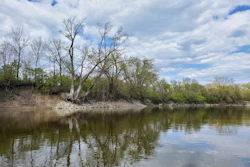
Des Moines Water Works (DMWW), Iowa’s then-largest water utility, sued three rural counties in the northwest: Buena Vista, Calhoun, and Sac. The lawsuit claimed that all three counties discharged large amounts of nitrates (used to fertilize crops) from drainage ditches into the Raccoon River without a proper permit. DMWW said these high nitrate levels threatened the health of 500,000 Iowans in Central Iowa.
About 17% of Iowa’s population relies on the Raccoon River for drinking water. The cost of keeping that drinking water safe and clean isn’t cheap, and utilities are responsible for meeting federal limits for nitrate in water from the tap. That is exactly the burden now landing on CIWW.
While the lawsuit was filed in 2015, nitrate levels continue to be a concern for central Iowans 11 years later. Halfway into 2026, the nitrate levels are at an all-time high—a report from KCCI states that the nitrate reading has read above 10 milligrams per liter (the EPA standard) for 86 days.
Dr. Revanth Mamidala, a researcher in civil and environmental engineering, studied nitrate levels in the Raccoon and Des Moines rivers during his Ph.D. at Iowa State University. He said these rising nitrate levels can’t be attributed to agriculture alone—climate is also a driving factor.
When the temperature and moisture content in soil are just right, natural mineralization processes convert organic nitrogen into nitrate, a form that dissolves easily in water and can build up in the soil. During heavy rain or when the snow melts, the nitrate that builds up in the soil can be flushed into streams through underground tile drains and can also seep into groundwater. Due to recent mild winters with temperatures warmer than usual, Iowa experienced high spring nitrate levels during 2025 and 2026.
“Even when there was snow, it melted quickly, and there were high nitrate levels because of this mineralization that had happened,” he explains. “That is a major reason why so much nitrate ended up in streams.”
This impacted both groundwater and drinking water.
What this means for drinking water
When nitrate is contaminated through agricultural practices or wastewater, it can cause serious health problems. This includes “blue baby syndrome,” birth defects, and various types of cancer.
The U.S. Public Health Service set its first legal nitrate limit in 1962 strictly to prevent blue baby syndrome. The disease, also known as methemoglobinemia, affects the blood’s ability to carry oxygen—and infants under six months old are especially susceptible to it.
A 2018 review of more than 30 studies, published in The International Journal of Environmental Research and Public Health, found that prolonged nitrate exposure is linked to colorectal cancer, thyroid disease, and birth defects. An additional study from the Iowa Women’s Health Study cohort also uncovered a link between high nitrate levels and colon cancer as well as rectal cancer. In 2023, the Environmental Protection Agency (EPA) announced it would reassess the nitrate standard for cancer and thyroid risk since those weren’t factored into the original limit.
It’s not just tap water that carries the worry. “Since we have high amounts of nitrate and phosphorus in surface waters, we often come across no swimming advisories in lakes because of high algal toxins alongside E-Coli,” Dr. Mamidala says. “Health risk is a major concern in Iowa.”
DMWW ultimately lost the lawsuit in 2017, when a federal court dismissed the case. But its efforts weren’t for nothing—the utility joined forces with 11 other utilities, communities, and rural providers in 2024 to form CIWW. The organization handles the wholesale delivery of water across the region.
Looking ahead
In June 2026, Iowa Gov. Kim Reynolds signed a $319 million water quality package into law as part of the state’s “Farm to Faucet” plan. The funds will be spread out over the next 12 years, but $25 million will be directly allocated to nitrate removal—it will be used to double CIWW’s nitrate removal capacity within three years.
“The government is doing its best to invest in the right place,” Dr. Mamidala says. “As researchers, we’re working on finding out the most economical and effective places to treat so we have the best outcomes with more reductions happening within the river basin.”
While the $25 million going to CIWW changes how much nitrate the region can treat, it doesn’t change how much nitrate gets into the water in the first place.
To this day, the tension that pushed DMWW to court in 2015 is still unresolved: Should nitrate reduction stay voluntary, or does it need to be mandatory?
Over the next 12 years, hopefully Iowans get the answer they’re looking for.