
When a new wastewater treatment technology arrives in North America, utilities rarely ask whether it works.
They ask whether it will work here.
Will it perform during spring snowmelt? Can it handle a sudden surge in infiltration and inflow? Does it fit within existing infrastructure? Will operators be able to run it confidently? And perhaps most importantly, who else is already using it?
Those questions help explain why demonstration projects remain an important part of technology adoption in the water sector. Even technologies with successful installations around the world often face a final hurdle before widespread adoption: proving themselves under local conditions.
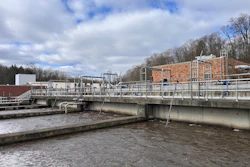
That is the goal behind the new Cyclor® Turbo demonstration project in East St. Paul, Manitoba.
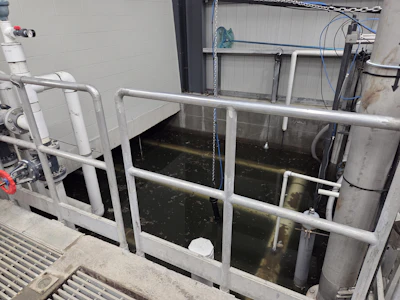
Developed by SUEZ and brought to North America through a partnership with Nexom, an Axius Water company, Cyclor® Turbo is an aerobic granular sludge (AGS) process designed to help utilities increase treatment capacity and improve nutrient removal within existing infrastructure. But before the technology can gain traction in North America, Nexom wanted a local reference site where utilities, consultants, and operators could see it functioning firsthand.
"We really prefer to call it a demonstration plant because it's much more than just a pilot," said Damian J. Kruk, Ph.D., P.Eng., Senior Process Engineer at Nexom. "We essentially converted one of the two reactors into a full-scale plant."
For Kruk, the need for a demonstration project comes down to a simple reality of the water industry. "Nobody wants to be the first one to operate the new thing," he said.
A different operating environment
 Nexom
Nexom
"This is critical infrastructure that impacts the health and safety of the public," Kruk said. "As much as we are confident with the technology, and it might be new to North America, it's not new. It did not just appear on the market."
Still, conditions in North America differ from those found in many existing AGS installations.
Cold-weather operation remains a major consideration. So do large wet-weather flow swings, infrastructure constraints, and regulatory expectations. Those realities influenced Nexom's decision to establish a local demonstration project rather than simply relying on international operating data.
"It helps to showcase to local operators and owners that it will operate in those conditions too," Kruk said.
That thinking drove the selection of East St. Paul.
Testing the technology under stress
Located just north of Winnipeg, East St. Paul presented a combination of conditions that made it an attractive proving ground.
The community experiences harsh winters, significant seasonal variability, and substantial infiltration and inflow during snowmelt and storm events. Startup of the Cyclor® Turbo system occurred under particularly challenging conditions.
"We were actually starting the process at the worst possible time of the year," Kruk said. "The temperature was just around 9 degrees."
The utility also experiences dramatic hydraulic fluctuations. During one recent storm event, plant flow increased from approximately 2.5 million liters per day to 22 million liters per day.
"It's almost a tenfold increase in flow just in a day," Kruk said.
Rather than viewing those conditions as a drawback, Nexom saw them as an opportunity.
"We got the place where we can test it to the extremes," Kruk said. "So we can be fairly confident that whenever we move it to a different location, North America is not going to be worse than this."
Beyond performance claims

Aerobic granular sludge has already gained recognition in North America, but implementation challenges have limited adoption in some cases. Existing AGS systems often require deeper basins, equalization volume, or additional infrastructure that can complicate retrofit projects.
Kruk said one of the most common questions utilities ask involves compatibility with existing facilities.
"People get sold on the benefits of it, but then when they go deeper into implementation, they're finding out we need deeper tanks, we need additional equalization, or we need additional tankage," he said.
That challenge is particularly relevant in North America, where many wastewater facilities were constructed with shallower basin configurations than those commonly found in Europe.
"This is one of the biggest differences between North American infrastructure and European infrastructure," Kruk said. "We tend to have much shallower tanks."
Cyclor® Turbo was specifically developed to operate within those constraints, opening the possibility of retrofitting existing infrastructure rather than constructing entirely new facilities.
The bigger opportunity
While the East St. Paul project is intended to validate the technology, it also reflects a broader challenge facing utilities across North America.
Many wastewater plants face tightening nutrient limits, population growth, and increasing treatment demands. At the same time, many sites have limited room for expansion.
As a result, utilities are increasingly looking for ways to extract more performance from infrastructure they already own.
"The systems that are landlocked and need to increase capacity without really having space to expand, that would be number one," Kruk said.
Existing SBR facilities may represent one of the clearest opportunities.
"The lowest-hanging fruit is you have an existing SBR and you're at the point where you're considering building another one or two," Kruk said. "Well, you may not have to do it."
That possibility is part of what East St. Paul hopes to evaluate over the next several years. The project received regulatory approval in 2025, entered construction in October of that year, and began operation in March 2026. The demonstration permit allows operation for three years.
For Nexom, success extends beyond treatment performance.
The company hopes to bring consultants, utility leaders, and operators to the site, allowing them to see the technology operating under real-world conditions and speak directly with those running it.
"This is not just on paper," Kruk said. "You can get to talk to the operators who actually have hands-on experience with the technology. You get the real data."
Ultimately, that may be the most valuable outcome of the project.
In the water sector, innovation rarely spreads through marketing claims alone. It spreads through operating experience, trusted references, and proof that a technology can perform under the same conditions utilities face every day.
The East St. Paul demo was built to provide exactly that.