
Many utilities struggle to protect critical infrastructure while managing water resources efficiently. This problem continues to intensify as industries face rising demand, increased operational complexity, and the expansion of data centers.
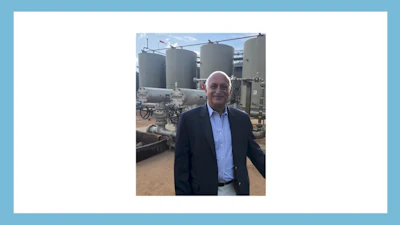
As CEO of Tekleen, Nagui Elyas focuses on how filtration systems can help utilities maintain performance as demand rises and complexity increases. He recognizes the importance of engineering reliability, customer partnership, and customized solutions to address infrastructure challenges.
Water Daily: Tekleen has been in the water filtration space for over 40 years. How do you see the role of water filtration evolving today across industries?
Water filtration has moved from being just a "supporting component" to something that directly impacts how the entire system performs.
Whether we are talking about data centers, irrigation, steel, or petrochemical plants, the expectation today is continuous operation. Systems are running longer, under greater demand, and with almost no margin for error. What we have seen in our work is that filtration is no longer just about removing particles. It is really about maintaining uninterrupted flow during the backwash cycle. If you can't maintain that flow, you are risking the equipment.
What is the true operational cost of manual filtration when you look beyond labor?
The real cost is cumulative and it is almost always underestimated. We call this the Lifelong Cost of Operation (LCO).
When people look at manual filtration, they only see the labor. But the real cost shows up in energy consumption and equipment wear. Manual cleaning requires you to interrupt the flow or bypass the filter, which allows solids to keep circulating. Over time, that leads to fouling in heat exchangers and extra wear on pumps.
In industries like data center cooling or heavy manufacturing, even small inconsistencies in water quality can affect performance. The manual option ends up costing much more over the life of the asset because it increases maintenance frequency and puts critical infrastructure at risk.
What is the biggest misconception utilities have about automated water filtration?
The most common misconception is that automation is mainly about reducing labor costs. In reality, it is about maintaining consistency and avoiding interruption.
Some automated systems can clean in seconds while maintaining a 100% uninterrupted flow. In industries like steel, petrochemical, and irrigation, operators aren't just looking to save time on cleaning—they are looking for system stability. They need to know that the filtration won't stop the process.
When you say “self-cleaning,” how should operators think about the role of automation versus manual systems?
“Self-Cleaning" changes the role of the operator from being reactive to being proactive. Instead of scheduling downtime or responding to a clogged system, the operator oversees a filter that cleans itself using only the line pressure.
From our experience with municipal and industrial systems, this allows teams to focus on optimizing the plant rather than constantly maintaining the filtration.
How do you see filtration impacting system performance during peak demand periods?
Peak demand is where filtration has the biggest impact. As temperatures rise—especially in data center cooling or irrigation—the systems are under a lot of stress. Any interruption in flow or any fouling in the heat exchangers can quickly cause a drop in performance.
We see this across multiple industries where maintaining that continuous flow is the only way to stabilize the system when demand is at its highest. If the filter stops the flow to clean itself, the whole system suffers.
Where do you still see gaps or challenges in how filtration is approached today?
The main challenge is still trying to apply "standard" solutions to very complex systems. Water quality and flow rates vary so much between a steel mill and a data center. When filtration isn't designed specifically for those conditions, the performance will always be limited.
A large part of our work is partnering with engineers to develop customized water filtration solutions. We use high-quality stainless-steel screens and select the exact micron level based on the application. That customized approach is what ensures long-term consistency and efficiency.
How are operators and utilities beginning to think differently about the value of automation?
There is a big shift toward looking at the total system performance rather than just individual components. When operators start to quantify their water usage, their energy bills, and the cost of operational disruptions, the value of automation becomes very clear.
In industries we have worked with, including steel and petrochemical processing, we’ve seen that improving water efficiency through automation has a measurable impact on the bottom line. It’s no longer just a maintenance item; it’s a profit and loss item.
If the benefits are clear, what is still slowing adoption across the industry?
In many cases, it’s just familiarity with the old way of doing things. Operators continue using what they know—like sand media—until the limitations become too obvious to ignore.
As demand on water systems continues to grow, what should operators and decision-makers be prioritizing today?
The priority has to be consistency, efficiency, and long-term reliability. As demand increases, we can’t afford systems that waste water or require frequent downtime.
Is there anything else you’d like to share that we haven’t discussed yet?
Water filtration is often viewed as a secondary component, but it plays a direct role in how efficiently resources are used. As we look at the future of asset management, the focus is shifting toward continuous performance and long-term reliability.
Filtration that maintains continuous flow and is designed around real operating conditions isn't just an improvement—it’s a critical part of how industries protect their infrastructure and prepare for the challenges of water scarcity.
Editor's note: This interview was edited for clarity and length.