Water is not a guarantee in Jal, New Mexico. To secure this vital resource, the desert community has upgraded its grid with smart water meters, while exploring the feasibility of repurposing treated wastewater from surrounding fracking operations.
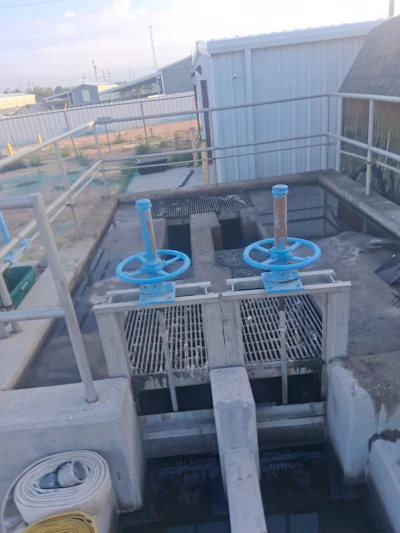
This summer, Jal officials are also soliciting designs for a new wastewater treatment facility. The $20-25 million project will replace aging infrastructure, a must for a drought-prone region where summer temperatures can exceed 120 degrees.
“This will allow us to expand the system as the city grows,” said Jal city manager Wesley Hooper. “(The plant) will also provide us with a better class of water, which will allow for more types of use.”
Jal is New Mexico’s southeasternmost city, a 2,047-resident enclave that shares a border with Texas to the east and south. Though removed from major metros, the town won’t let its long-term struggle with drought go unnoticed or uncared for. Alongside plans for a new treatment plant, Jal is replacing old water and sewer lines, and is upgrading a transmission line from a nearby well field.
This difficult, costly work is impaired by pipelines laid across the desert to El Paso, part of a natural gas industry that made Jal a boomtown in the 1920s.
“We’ve got some rocky areas, but we also run into steel lines built by the El Paso Natural Gas Company,” said Hooper. “So, we’re replacing lines in the street, plus we have new transmission lines coming in. We also have two new water wells, and will be replacing another well this year.”
Jal’s forthcoming treatment system will use membrane bioreactor technology, which combines microfiltration with advanced biological treatment. A pivot to MBR came after plans for a conventional treatment facility went over budget – the new system will be financed through the New Mexico Finance Authority and the Colonias Infrastructure Fund, which provides southern New Mexico communities with zero-interests loans for wastewater and flood control projects.
Situated on the Permian Basin - the largest oil-and-gas producing area in the U.S. – Jal welcomes outside workers who live in RVs or other temporary housing. As recurring population surges continue to test the town's water systems, plant modernization is the only way forward, said Hooper.
“Our population doubles because of the oil-and-gas workers,” Hooper said. “Getting this new treatment facility will put us in compliance with the state.”
The importance of planning ahead
Despite being small-staffed and relatively isolated, Jal has deep experience in water treatment and conservation work, added Hooper. In July 2024, the city deployed 1,000 ultrasonic smart meters across its water system – real-time data allows officials to detect leaks while giving residents insight into their usage.
In municipal infrastructure, building a solid reputation among funders can move efforts like the new treatment plant from planning to completion, Hooper said.
“(Officials) know who we are from our street work,” he said. “Relationship building is the key to receiving funding for any type of grant-funded projects. When the awarding entity knows the project is going to be a success and trusts the entity receiving the funding, it is much easier to be awarded.”
The New Mexico Environment Department serves a dual role for municipalities like Jal, acting as both regulator and partner in addressing water needs. Smaller towns with systems dating back decades are hit by a “double whammy” of deferred maintenance and glaring infrastructure gaps, noted NMED construction programs bureau chief Dennis Romero.
“Even large cities have trouble keeping up with those replacement costs,” said Romero. “For smaller systems, there’s a capacity deficit across technical, managerial and financial resources. With drought and groundwater depletion, (small towns) don’t have the human or financial capital to build or maintain resilient systems.”
While Jal stands out for its smart meter implementation, it remains tethered to the same single-source vulnerability that threatens other small cities. Although the Clean Water State Revolving Fund and New Mexico-based Water Trust Board provide financing, these options still carry a debt burden, said Romero.
Municipalities planning water system upgrades should conduct an audit utilizing the American Water Works Association’s free, industry-standard software, Romero said. An asset management plan, meanwhile, can act as a resource for future project implementation, he said.
“Make it an untouchable ‘piggy bank’ that you put into a capital fund,” said Romero. “If we see a municipality or town that does this, they go to the top of the list for loans because they have shown responsible fiscal management and the ability to pay back loans. They have established debt capacity – the ability to borrow money for projects and pay it back.”
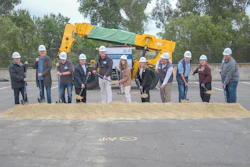
Jal officials aim to break ground on the new treatment plant within the next six to eight months, with construction expected to take about a year. City manager Hooper said that foresight is the only path forward for a community in the grip of scarcity.
“In smaller towns where there’s not big revenue, you may be planning ahead as far as 20 years,” said Hooper. “You’re budgeting to get a project designed, and have that funding when you’re ready to build. But to do that, you have to think ahead quite a ways.”