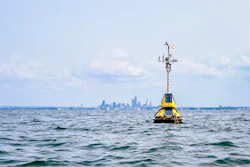

Outside Texarkana, where Wright Patman Lake stretches across the Piney Woods of East Texas, the Riverbend Water Resources District is building the largest water infrastructure project in its history.
On paper, the project is straightforward: a new raw water intake, an 84-inch transmission pipeline, a raw water pump station, a regional treatment plant, and new transmission mains that will deliver drinking water to a dozen participating communities across Northeast Texas.
In reality, nearly every component exists because of a problem engineers and utility leaders were trying to solve.
The intake is being relocated and connected to an 8,000-foot dredged channel so it can continue drawing water during extreme low lake levels. The pump station is being built well above the shoreline, because future floods demanded it. Even the 84-inch pipeline reflects a balancing act: large enough to eventually move more than 130 million gallons of water per day, but engineered so water continues moving fast enough to prevent sediment from settling inside the pipe during the system's early years.
Taken together, those decisions reveal that Riverbend is rebuilding a regional water supply system first constructed in 1968 while preparing for a future that includes growing communities, new industrial customers, and a level of operational flexibility its existing system can no longer provide.
"Our existing system goes back to 1968," says Riverbend Executive Director Kyle Dooley. "We're at a point where it's time to modernize. We need to add capacity, but we also want the ability to deliver raw water to support economic development growth."
That distinction shapes nearly every aspect of the project.
Riverbend's new system isn't designed only to produce more drinking water. It is also being built to supply raw water for industrial process and cooling applications, creating new opportunities for manufacturers considering the nearby TexAmericas Center, a 12,000-acre industrial redevelopment site built on the former Lone Star Army Ammunition Plant.
"We're looking to be able to support both sides as they grow," Dooley says. "Not only treated water at the capacity we may need as they come in, but also having the capability to deliver raw water so it could be used as process water, cooling water, whatever that may be."
For Riverbend, that means designing infrastructure around two very different demand curves.
The district has decades of historical water use data from its member communities. Those trends help engineers understand how residential demand is likely to evolve.
Industrial growth is another matter entirely.
"It's easy to go back and look at what our historic baseline usage is," Dooley says. "What's more challenging is trying to project growth when you don't really have a historic baseline."
That uncertainty influenced nearly every engineering decision that followed.
Rather than simply replacing aging infrastructure with larger versions of the same assets, Riverbend and its design team began asking a different question:
How do you build a system that meets today's demand while making tomorrow's expansion easier?
The answer shaped everything from the size of the intake pipeline to the layout of the treatment plant and the sequencing of future construction phases.
Why an 84-inch pipeline?
One of the first numbers readers notice on Riverbend's project drawings is the size of the raw water transmission line.
At 84 inches in diameter, the pipe is enormous, large enough for an adult to stand inside. But determining its size wasn't simply a matter of estimating how much water the district hopes to deliver in the future.
It became an exercise in balancing today's operations against tomorrow's capacity.
Ultimately, the system is designed to move roughly 134 million gallons of raw water per day from Wright Patman Lake to the new treatment plant. But Riverbend won't need that much capacity the day the system comes online.
That creates an engineering problem many outside the industry never consider.
"If you make the pipe too large for the initial phases, velocities get too low," says Black & Veatch Project Manager Mike McCure. "When that happens, sediment can begin settling out inside the pipeline."
In other words, bigger isn't always better.
A pipeline designed exclusively around future demand could become more difficult to operate during its early years. Water moving too slowly allows suspended material to accumulate inside the pipe, increasing maintenance requirements and reducing hydraulic efficiency over time.
The design team instead approached the pipeline as part of an evolving system.
Storage, pump operations and phased construction were all coordinated to ensure the line performs efficiently today while accommodating significantly higher flows decades from now.
"It's accommodating current demands while also preparing for future demands that are much bigger," says Stephanie Bache, regional leader at Black & Veatch. "That lends itself to engineering challenges because we're designing a flexible system that serves the present while preparing for significant future growth."
That philosophy extends well beyond the pipeline itself.
Rather than building infrastructure that will eventually need to be replaced again, Riverbend's team designed the project so future expansion can occur in phases. As new industrial customers arrive or member communities grow, additional capacity can be added without fundamentally redesigning the system.
For Dooley, that flexibility has become one of the project's defining characteristics.
"As we go through the process," he says, "we're trying to make sure we're focused not only on what we need today, but leaving ourselves enough room to grow easily and quickly as things change."
It's a deceptively simple objective, but achieving it required engineers to think less about designing a single pipeline and more about designing a regional water system capable of evolving over the next several decades.
Designing for drought (and floods)
Ask someone to point out the most important piece of Riverbend's new water system, and they might choose the intake structure reaching into Wright Patman Lake.
The engineers might disagree.
In many ways, the real story lies in where everything is located.
Riverbend's previous intake had served the district well for decades, but it also revealed two operational vulnerabilities. It sat relatively high in the reservoir and had experienced sediment buildup over time, conditions that could complicate operations during prolonged drought or increase maintenance requirements.
Rather than simply replacing the intake in the same location, the design team reconsidered how the entire raw water system should interact with the lake.
The result is an approximately 8,000-foot dredged channel extending from the intake into deeper water.
"If lake levels continue to drop, we still have to be able to get water to the intake," says Mike McCure. "The dredged channel allows us to continue pulling from deeper portions of the reservoir."
The design isn't based on average lake conditions. It's based on the conditions operators hope they never have to face.
The same thinking shaped the pump station.
Conventional wisdom might suggest placing the pumps as close to the lake as possible. Riverbend's pumps, however, sit well back from the shoreline on substantially higher ground.
That decision was made because of flooding.
By relocating the station above projected flood elevations, engineers can protect motors, electrical equipment and control systems during extreme high-water events. The tradeoff is a more complicated civil project, requiring deep shafts and tunnels to connect the intake pipeline to the pump station.
"It's really about building a resilient system," says Bache. "We see high flood events, and we see droughts. The engineering challenge is designing infrastructure that accommodates both."
Those decisions illustrate a broader reality for utilities designing major water infrastructure today.
Resilience is reflected in dozens of small decisions—where an intake is placed, how deep a channel is dredged, where electrical equipment sits, and how facilities are positioned relative to the landscape.
Most of those decisions will never be visible to the public.
But if Riverbend experiences either an extreme drought or a major flood over the coming decades, they may prove to be some of the project's most consequential.
The hardest part wasn't engineering
Ask Dooley what surprised him most about leading a project of this scale, and he doesn't mention the intake, the pipeline or the treatment plant.
He talks about people.
"I don't know that I was as prepared as I probably should have been," he says. "The most complex part has probably been the permitting at both the state and federal level."
The engineering itself was only one layer of the project.
Riverbend also had to coordinate multiple engineering firms, a program manager, a construction manager at risk (CMAR), regulatory agencies, participating member communities, environmental reviews and funding partners, all while keeping the project moving toward a planned completion in 2029.
"It's not really just the process," Dooley says. "There's so many stakeholders involved. There's so much coordination that has to go not only between your review teams at whatever agency that is, but all your designers."
For Dooley, one of the project's greatest strengths has been assembling a team capable of navigating that complexity together.
"We've got a lot of good design engineers, a program manager and a CMAR all doing a great job, kind of all pulling in the same direction," he says. "Without that, I don't know if we'd be where we are now."
Black & Veatch sees the collaboration extending well beyond design.
McCure says operators have remained involved throughout the project, ensuring the final system reflects not only engineering calculations but also the realities of day-to-day operation.
"Every client operates differently," he says. "Understanding how they like to run their facilities, what equipment they prefer, and getting those operations people involved early helps ensure they're ready when the project comes online."
Those conversations may not appear on project drawings, but they shape the finished product as much as any hydraulic model.
By the end of 2029, Riverbend's new intake, pump station, treatment plant and transmission system will replace infrastructure that has served Northeast Texas for more than 60 years. Yet perhaps the project's most valuable lesson for other utilities isn't found in its 84-inch pipeline or its drought-ready intake.
It's that projects of this scale are rarely solved by engineering alone.
They succeed when utilities, designers, regulators and operators share the same goal from the very beginning.
As Riverbend prepares to supply both growing communities and future industries across Northeast Texas, that coordination may prove just as important as the infrastructure itself.