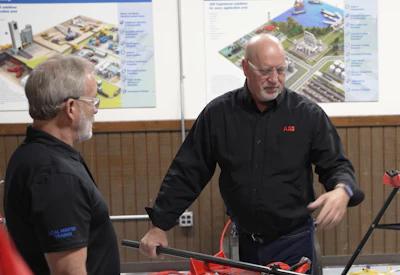

U.S. wastewater infrastructure earned a D+ in the 2025 American Society of Civil Engineers (ASCE) Infrastructure Report Card. This less-than-ideal grade sheds a harsh light on the current state of the industry, especially where it needs improvement. Trent Davis
“I think the main reason it received that rating is because funding is a challenge,” says Trent Davis, market development manager for the water and wastewater industry for ABB’s Installation Products Division. “Municipalities have a hard time getting funding from the government, which forces them to keep equipment longer than it was intended.”
The engineers ABB works with aim to keep facilities up and running for two decades at most. Twenty years, Davis says, is the sweet spot for the life expectancy of a water plant. Unfortunately, most plants are running four to five times longer than that.
There are several factors that have contributed to outdated wastewater treatment plants and why many communities still rely on them today.
Ongoing challenges for the wastewater industry
Wastewater operators face a multitude of system problems every day, and it’s almost impossible to address them all while they’re understaffed and facing a growing workforce shortage.
“The main challenges go to the maintenance and operations teams,” Davis says. “There are so many things they want to go back and address, they just don’t have the time. They have to figure out how to keep the plant up and running so it doesn’t go down.”
That constant triage leaves little room for the kind of long-term planning that could offer a solution, which is where budgeting becomes just as important as staffing.
But the first thing utilities need to master is properly managing their budget.
“There’s a pool of money allotted to them, and how they want to dispense that money is always a challenge,” he explains.
These challenges compound each other. A plant running years past its intended lifespan is also a plant more likely to have degraded seals, aging conduits, and fittings that were never rated for the ingress protection that modern electrical systems need. That’s where one of the industry’s most dangerous risks comes into play.
The water and electrification challenge
Water and electricity don’t mix. In wastewater treatment plants, the central challenge is keeping water out of electrical systems, also known as water ingress.
Conduits, or pipes used to transport water from a treatment facility to distribution points, is typically where these electrical systems live. Fittings determine whether water enters that system or stays out, and installing the wrong one could have serious consequences.
“Some fittings are better at keeping the water out than others,” Davis explains. “One of the things we do with our fittings is get them third party tested and verified, which means we can put a water ingress rating on the product.”
Wastewater treatment facilities process millions of gallons of water every day, often in environments where explosive gases can accumulate. Keeping water out of electrical systems in these settings is critical—moisture intrusion combined with a volatile atmosphere raises the risk of arc-ignition and potentially catastrophic failure. ABB was called in to help after this happened at one wastewater facility.
When a Southwest U.S. facility faced an arc ignition explosion, it traveled through multiple parts of the system—this threatened both equipment and personnel. Without proper containment, facilities will continue to face safety hazards, operational downtime, and equipment degradation stemming from corrosion.
“We recently developed a case study on that water treatment facility where there was an explosive gas that wasn’t sealed off in parts of their system,” he says.
In order to prevent the spreading of explosive gases, it’s critical to seal off different parts of the system from the others. This ensures the gas stays in one place. By failing to do this, the Southwestern facility racked up hefty damage costs.
“That explosion spread to three to four areas of the plant and caused millions of dollars in damages,” Davis explains. “Fire and explosion risks are a huge concern for these facilities.”
Mitigating risk
Regular preventative maintenance is key for mitigating risk. But when facilities are already short-staffed and stretched too thin, it’s easy for simple maintenance tasks to slip through the cracks.
“If your plan is to do regular maintenance the first Monday of every month and a pump goes down, you’re going to have to shift,” Davis says. “But being able to hold on to a regular preventive maintenance schedule is extremely important. It helps you catch corrosion early so you can address it and protect these systems longer.”
Fixing the small things will help the U.S. improve its D+ ASCE grade. That starts with getting the right fittings and seals while also keeping up with a regular preventive maintenance schedule.