Subsidence is nothing new for southeast Texas. Since the mid-1800s, groundwater pumping has caused thousands of square miles in the Houston-Galveston region to sink by a foot, with land elevation dropping over ten feet in the hardest-hit areas.
Demand for water has only increased alongside Houston’s booming population, leading to stricter groundwater regulation and a slow transition to alternative supplies. Local officials want to make every drop count, both through conservation and an eventual full-time shift to surface water.
“We have to prevent subsidence, and do that in a timely way,” said Michael Turco, general manager of the Harris-Galveston Subsidence District (HGSD), created by the Texas Legislature in 1975 to regulate aquifer withdrawal. “The importance of providing alternatives sooner rather than later ultimately comes down to recognizing the cost of subsidence versus the cost of providing alternative water supplies. As a coastal region already experiencing sea-level rise and severe weather-related events, any permanent loss of land elevation increases flood risk, damages infrastructure, disrupts natural water cycles, and more.”
Based on data analysis and coordination with regional partners, the HGSD has split its jurisdiction into three zones, all looking to reduce subsidence through limits on groundwater pumping. Withdrawals for each regulatory area are subject to demand, geography and the availability of alternative sources. Long-term, the HGSD has mandated an 80% transition to alternative supplies for all jurisdictions by 2035.
The district, which covers Harris and Galveston counties, is joined in this effort by four Houston-area water authorities. These state-chartered organizations oversee infrastructure projects while managing the HGSD-mandated shift to non-groundwater supplies.
In the meantime, Houston’s population continues to increase, with the metro area ranking first in the U.S. for population growth between 2024 and 2025. Industrial, irrigation and public supply comprise the three pillars of water use under HGSD’s control.
Regional expansion makes the search for diverse supplies critical, though the transition is complex. Surface water is more expensive to treat, and recycled water requires implementation of a separate distribution system, noted Turco.
State legislature formed the water authorities to meet these challenges. This work is essential for stabilizing the Gulf Coast Aquifer System, where falling levels have led to subsidence and damaged wells, Turco added.
“We have flat topography, too, so even a bit of subsidence can have a big impact on where water wants to go when it hits the ground,” he said. “(Land sinking) is irreversible as well, and can’t be undone.”
Replacing groundwater with centralized supply
Subsidence is caused by the removal of water, oil or natural gas, although earthquakes and other natural events can lead to elevation loss as well. For the greater Houston-Galveston area, unabated water withdrawals caused formerly loose clay layers to settle and sink. Consequences include increased flooding, changes in drainage patterns, and damage to roads and bridges.
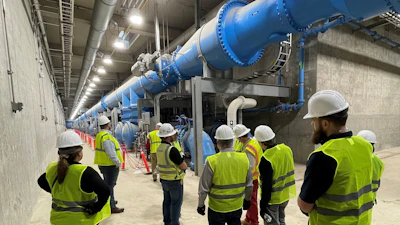
To counter these effects, regional water agencies are deploying a multi-front strategy of supply and conservation initiatives. Among them is the Surface Water Supply Project, a $1.2 billion infrastructure overhaul featuring two pump stations and 55 miles of new pipeline. Authorities also point to the Northeast Water Purification Plant Expansion near Lake Houston, slated to increase treated water production from 80 million gallons per day to 400 MGD.
Similar to its fellow RWAs, the West Harris County Regional Water Authority aims to reduce groundwater pumping and promote surface water use. Currently, the area’s water mix is a combination of groundwater (47 MGD) and surface water (25 MGD), though authority president Eric Hansen expects that balance to tip over time.
The Surface Water Supply Project alone will transport 150 MGD of drinkable water to a service area the size of Pittsburgh. Additional surface water is already being delivered to Lake Houston through the completed Luce Bayou Interbasin Transfer Project, said Hansen.
“Collectively, these projects position (the authority) to meet regulatory requirements, respond to drought conditions, and accommodate long-term growth, all while supporting efforts to prevent further land subsidence in west Harris County,” Hansen said in an email.
While meeting HGSD conversion mandates can impact water bills, the West Harris authority has not increased its rate since 2023 - surface water carries a premium of $4.35 per 1,000 gallons, compared to a $3.95 groundwater rate. Rate fluctuations are communicated by the authority via newsletters, social media and town hall meetings.
“Early efforts helped residents understand upcoming changes in water sources, delivery and costs, while consistently reinforcing a ‘use water efficiently’ message,” Hansen said. “From our perspective, success 20 years from now is about consistently delivering a reliable, sustainable water supply and maintaining full compliance with regulatory requirements.”
In the interim, HGSD officials are tracking land-level changes via GPS stations scattered across Harris and its neighboring counties. Public education on conservation and water efficiency remains a key element of HGSD’s future efforts – administrators are currently weighing water supply assets such as seawater desalination and advanced aquifer storage techniques.
HGSD leader Turco said history provides a glimpse into the dangers of a sinking landscape. In 2015, the “Memorial Day Flood” killed eight Houstonians after as much as 11 inches of rain swamped the area. Hurricane Harvey came in 2017, causing catastrophic flooding that inundated thousands of homes and businesses.
Research by the University of Houston shows that subsidence rates have dropped in regions that have converted to surface water. Intensifying this work is essential to protecting the wider community from further setbacks, said Turco.
“Let’s support the growth of a sustainable water supply, which is what we’re working to do,” Turco said. “We’ve been consistent in preventing subsidence with reasonable regulations, which is why we’ve had success so far, and why we’re on the path to continue that success.”