Marvel Harrison was recently strolling the pristine sands of Imperial Beach with her four-year-old yellow lab, Chibaca, when she struck what she calls a “wall of stench.” A chemical stink from the water strong enough to bring on dizziness and a harsh cough. After returning to the oceanside home she shares with her husband, Tom Csanadi, Harrison felt so ill that she had to rest her head on the kitchen counter.
“(Chibaca) flopped on the floor, panting like he had just run a marathon,” said Harrison. “Tom asked what was wrong. I said, ‘I don't feel well, my head is sort of spinning and I feel exhausted.’ I had to cut the walk short because the stench was so bad.”
 Tom Csanadi and Marvel Harrison
The beach itself has been closed to swimmers for over 1,000 days, due to a relentless surge of sewage flowing from the Tijuana River. Beyond noxious odors – which swing from a septic-tank reek to that stinging chemical burn – the pollution is actively sickening communities from the Mexico border to Coronado 15 miles to the north.
In a 2025 survey from the Centers for Disease Control, about 64% of respondents in San Diego’s South Bay had at least one new or worsening physical health symptom they attributed to the sewage crisis. School attendance has taken a hit as well, with six out of ten parents reporting absences caused by symptoms they attribute to pollution.
Still, subjective surveys cannot replace human testing, said Csanadi, a retired pediatrician. Despite the potential for swabs and blood tests to link local illness to pollution, no such diagnostic work is taking place, he added.
“There’s no secret to anyone here that we’re being poisoned,” Csanadi said. “I have to encourage people to see a doctor if they’re worried about it. The health department wants a burden of proof about harm being done, but I say that harm not being done should be the burden of proof. Let’s test and assess to show there’s no harm being done, because right now, everyone feels there is.”
A worsening situation
San Diegans taking part in the CDC survey reported headaches, congestion and coughing as the most common symptoms related to sewage overflows. Long-term exposure to even low levels of hydrogen sulfide gas from the river can cause respiratory damage as well as neurological impacts like memory loss. Harrison has endured a chronic cough along with headache and occasional nausea – a pulmonary workup in September revealed Reactive Airway Disease, an umbrella term for breathing issues caused by smoke, allergens or other triggers.
With the cause of these problems ostensibly obvious, Harrison and her husband keep their doors and windows shut, while using an air purifier on days the air is particularly thick.
“We’re changing our daily life, and keeping things sealed up,” said Harrison, a psychologist who works from home. “I know when it’s going to be a bad day, so I adjust where I can go or what I’ll do. I used to go boogie boarding at the drop of a hat. It’s something that gave me great joy.”
The couple retired to Imperial Beach during the 2020 COVID lockdown, following years in New Mexico and northern California. Located just five miles north of the Mexico border, Imperial Beach is California's southernmost beach town. Neighboring Chula Vista and National City are also suffering under the deluge of cross-border sewage, a disaster fueled by decaying infrastructure and chronic underfunding.
Although the U.S. and Mexico are working to clean up pollution, residents including Csanadi don’t expect measurable improvements for years yet. In the meantime, there are “band-aids” like a pipe expansion project at a turbulent section of the Tijuana River Valley. While the expansion may mitigate airborne toxic gases, it won’t reduce the amount of pollutants in South Bay’s waterways, Csanadi said.
“What kills me is there’s like 2,000 students within a half-mile radius (of the hotspot),” said Csanadi. “They are subject to this every day, and kids are more vulnerable to stuff in the air because they have higher lung surface area relative to their body weight (compared to adults). Kids have to learn in this environment."
Feeling stuck
Physical symptoms are perhaps easier to spot than the psychological toll the crisis is having on residents, said San Diego Coastkeeper executive director Phillip Musegaas.
“The local public beach has been closed for three years straight without a break,” said Musegaas. “People can’t go in the water, and they don’t want to go the beach anyway because the air quality isn’t good.”
Bound by limited resources, low-income residents can neither afford to travel to La Jolla for recreation nor leave the region permanently. Anger and disappointment are the watchwords for locals no matter their socioeconomic status, Musegaas said.
“It’s hard to quantify how many people are having mental health impacts, but there’s also frustration because their concerns are not being taken seriously, or being treated with the same urgency as other issues in the region,” he said. “There’s a sense of powerlessness here. It’s deeply disturbing and outrageous to have this happening in 2026.”
Imperial Beach resident Harrison has been pleading with lawmakers and health officials to act, a crusade encompassing two trips to the White House. For now, she and her husband are considering their options.
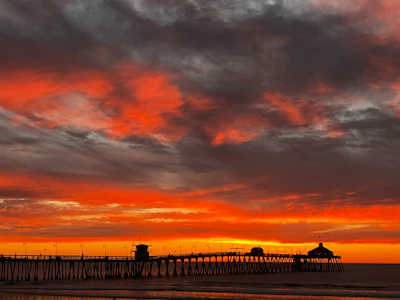
“It’s a fraught conversation about having to leave,” said Harrison. “The things that keep us here are the views, the beautiful sunsets, and living in a small, quiet town. There are long-time, intergenerational families here who have lived with this problem for decades, but not to this crisis level. They’ve come to believe that this is just the way Imperial Beach is and that the community here will never get the attention it deserves. There is a sense of apathy. I believe apathy is an extreme form of anger. Eventually people give up.”