In June, Texas and New Mexico reached a settlement in a Supreme Court fight over Rio Grande water and groundwater pumping. Under the ruling, New Mexico must honor the 1938 Rio Grande Compact and ensure Texas gets its full legal share of river water.
“The approval of this agreement is a historic win for the people of Texas, our economy and our State’s water rights,” said Texas attorney general Ken Paxton in a June 2 press release. “My office has worked diligently for years to secure this settlement, and I am grateful that the Supreme Court has approved it. This agreement helps Texas farmers and families receive the water they depend on every single day from the Rio Grande.”
At the same time, farmers and residents in New Mexico face tighter groundwater pumping limits in a region already dealing with chronic drought. Rafael Rovirosa, a fifth-generation farmer in La Mesa, said the region must unite to protect an increasingly scarce resource.
“I have faith that my fellow residents will work together to keep everyone as prosperous as possible,” said Rovirosa. “We need to be looking at sustainability not just for the next 10 to 20 years, but the next 50 to 100 as well.”
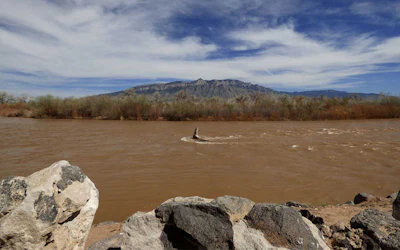
Stretching from Colorado to the Gulf of Mexico, the Rio Grande has lost 85% of its historic flows due to over-pumping and a years-long megadrought. Ryan Serrano, Lower Rio Grande Basin bureau chief for the New Mexico office of the state engineer, said meager mountain snowpack has also restricted river flows.
Yet, the region is fortunate to have two resilient aquifers in the Rincon and Mesilla, Serrano said. These sources are needed in light of below average surface water supply, as well as changes in Rio Grande Project water allocations. Under this federal reclamation initiative, water deliveries for Elephant Butte Irrigation District (EBID) farmers were slashed this year from three acre-feet to just four inches.
“When someone would ask my grandfather how he was doing, he’d say, ‘fair to partly cloudy,’” said Serrano. “That is the health of the Lower Rio Grande today. We’re in the midst of a drought and have low surface water supplies, so we’re relying on groundwater to meet demands.”
Staying in control
This summer’s Supreme Court ruling capped a decade-plus dispute over the Rio Grande, resolving Texas's claims that New Mexico was over-pumping shared groundwater. The settlement - focused on a basin between the Caballo Reservoir in New Mexico and the Texas state line – requires New Mexico to lower pumping from connected wells by 18,200 acre-feet per year by 2036.
In practical terms, the state must reduce its annual groundwater pumping in the basin by approximately 6% to 7% annually, with initial compliance costing $150 million. Failure to meet these requirements could result in hefty penalties or even another lawsuit.
More than 80% of groundwater used in the basin went to agriculture between 2021 and 2024. Pointing to the settlement’s ten-year timeline for curbing groundwater pumping, Serrano is heartened that New Mexicans will at least control their own future.
“It’s a best-case scenario, because negotiated resolutions between water users is always better than relying on (federal officials) who don’t live here and don’t know how water works as a lifeline to our community,” Serrano said. “With this ruling, we achieved a good portion of what we would’ve expected if we went to trial. We got certainty on water distribution, and we know what the rules are moving forward.”
In addition to pumping restrictions, New Mexico plans to purchase water rights from willing growers, which would essentially take their farmland out of production. A study is now underway to determine fair market price for these rights – in addition, farmers with large properties could choose to retire rights on just a portion of their farms, said Serrano.
“It’s a willing seller-billing buyer scenario,” he said. “Farmers who want to sell will be fairly compensated. Those who don’t want to sell have the right to use their farm as they choose.”
Fight for your rights
New Mexico has $150 million allocated for the voluntary purchase program. Rovirosa is among the growers considering the state's buyout, though he acknowledges many local farmers are reluctant to abandon their land. His operation, Stahmanns Farms, has been producing pecans for a century, beginning when Rovirosa’s great-great-grandfather bought land in the Mesilla Valley.
Now managing a 3,200-acre operation, Rovirosa is skeptical that state officials can even meet his asking price.
“I don’t think the state will consider my water rights,” said Rovirosa, who grew up on the farm before taking over as director of operations in 2017. “I’d rather the state buy from non-agricultural users, because farmers here don’t want to stop farming. This is their life and their family’s lives.”
State officials are coordinating with water rights holders to establish contingency plans should additional cutbacks be needed. Stakeholders in these discussions include EBID, the city of Las Cruces and New Mexico State University. New Mexico must also submit a Rio Grande management plan within two years as part of the settlement.
Deep into a 24-year drought, New Mexico must scale back water use along the basin, with more cuts possible if those curtailments don’t deliver. Under the Active Water Resource Management framework, state officials and local stakeholders can decide when and how to implement deeper cutbacks.
For now, basin bureau chief Serrano is confident the region can hit its 2036 reduction goals. Backed by $40 million in federal Inflation Reduction Act funding, New Mexico has runway to secure the remaining capital, said Serrano.
“That’s one of the positive things about the settlement – it gives us a landing strip to achieve (that work),” he said. “We are aware of the changing hydrological reality in New Mexico. We must be flexible in how we deliver water to the state line while managing groundwater within the state.”