 Photo: Brad Weaver
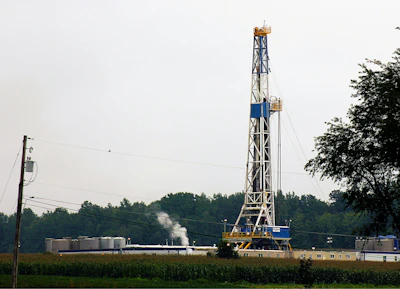
Hydraulic fracturing produces a considerable amount of wastewater – the Permian Basin fracking industry alone generates about 168 billion gallons of this toxic byproduct each year, according to a 2022 report by the Texas Produced Water Consortium. The U.S. Geological Survey estimates that individual wells need 1.5 million to 16 million gallons of water to fracture rock for shale gas extraction.
Numbers aside, the question remains: What is being done to manage the huge volumes of “produced water” from fracking in the U.S.? The answer depends on factors including a well’s location, the surrounding geology, and chemical makeup of the wastewater itself.
High salinity is a major hurdle for many reuse applications, especially agriculture or direct environmental discharge. Produced water quality varies widely, with dissolved salts just one of the contaminants present. Water from fracking may also contain oil, grease, heavy metals, residual fracking chemicals, and naturally occurring radioactive materials.
While states such as Pennsylvania and West Virginia are recycling produced water for drilling, areas with lower-salinity water are treating it for agricultural uses, whether irrigating crops or watering livestock.
“Beneficial reuse” of fracking byproduct in Wyoming ramped up in the last decade, mostly due to industry-wide interest in reusing this water rather than just disposing of it, noted Tom Kropatsch, state oil and gas supervisor for the Wyoming Oil and Gas Conservation Commission.
In Wyoming agriculture, produced water finds use as drinking water for livestock and wildlife. Within the oilfield, this water is injected underground to drive oil up toward the surface well, a process called waterflooding.
Like most states, Wyoming’s volume of reused water is small compared to the total volume generated, as most of this fluid is injected into reservoirs to displace oil, said Kropatsch.
“Wyoming is modest in its drilling activity compared to states like Texas and New Mexico,” Kropatsch said. “We are seeing more reuse within the industry, but it is still a very small amount of Wyoming’s produced water.”
Looking for alternatives
Improved efficiency in horizontal well drilling has increased the amount of freshwater needed for fracking. Most of this water returns to the surface with extracted gas – albeit with an altered chemical composition – and is often pumped back into underground wells for disposal.
Of the approximately 150,000 Class II injection wells in the U.S., roughly 40,000 are disposal wells designed for the oil and gas industry, according to the USGS. A fraction of disposal well operations have induced minor earthquakes, a significant enough issue that the industry has actively sought alternatives, said Dave Yoxtheimer, chair of the Pennsylvania department of environmental protection’s oil and gas bureau.
Reusing produced fluids for additional fracking is a popular choice, considering the expense of advanced water treatment processes such as distillation or reverse osmosis. Reuse of produced water is embraced in the Permian Basin of West Texas and New Mexico due to persistent drought and increasing energy demands. Pennsylvania, with its approximately 12,000 oil and gas wells, has likewise used fracking wastewater to drill new wells.
Most of the state’s natural gas is harvested from the 95,000-square-mile Marcellus Shale formation, which extends across Pennsylvania, New York, Ohio, West Virginia, and Kentucky. Commercial drilling of the formation began in 2004 – the liquid waste produced is so salty it’s considered brine, and primarily useful only for reinjection into wells, Yoxtheimer added.
“This water is heavier and denser than freshwater, and will fracture the shale better,” said Yoxtheimer. “It keeps the fracks more open and allows the oil to flow better. The salt came from down there in the first place, so it’s more compatible with the fracks than just throwing down freshwater.”
Any use besides hydraulic fracturing requires desalination, a process that removes dissolved salts from the water. Techniques like reverse osmosis, for instance, can help recover freshwater from waste streams. This membrane-based technology forces produced water through a semi-permeable membrane, leaving behind salts and other impurities.
Companies can expect to pay $10-$12 to treat high-saline emissions like brine, which is ten times saltier than even ocean water, said Yoxtheimer.
“So, produced water is not being used in Pennsylvania for anything beyond fracking,” Yoxtheimer said. “Using it to spray crops would require it to meet treated wastewater standards. Recharging aquifers would require a high level of treatment as well.”
What about disposal?
Disposal is another option for Pennsylvania’s produced water, though the state has only about 15 Class II injection wells. Historically, Pennsylvania allowed gas producers to mix fracking fluids with municipal wastewater, effectively bypassing the need for wells. Though the practice was outlawed in the early 2010s, the state now trucks produced water to one of 250 injection wells in neighboring Ohio, which has never permitted discharge of the hazardous effluent into surface water.
Yet, transporting fracking wastewater can be a pricey proposition – about $15-$20 per barrel. Given these high costs, it’s common for Pennsylvania natural gas companies to share produced water with one another.
“In many ways, these companies are in the same boat,” said Yoxtheimer. “If one company has 2 million gallons of fluid that will cost $100,000 to get rid of, they’ll just give it to their competitor. It became this horse trading scenario.”
Wyoming’s produced water that isn’t reused goes into disposal wells or evaporation ponds. Evaporation ponds, which also handle waste from other industries, filter out suspended solids or treat for bacteria.
Whereas fracking fluids in Pennsylvania and West Virginia are characterized by higher total dissolved solids, or TDS, Wyoming’s comparatively cleaner produced water facilitates a wider range of applications, said Kropatsch of the state conservation commission.
“We haven’t had any real issues with treating or using this water,” Kropatsch said. “The treatment needs for it are very low due to the good water quality, with filtration being the main treatment used.”