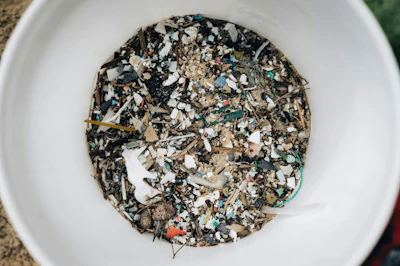

Despite steady improvements in wastewater treatment, microplastics are proving hard to catch.
That’s the conclusion of a new study from The University of Texas at Arlington, which reviewed existing literature on microplastic removal in treatment systems. The verdict? While most plants reduce the load, none eliminate it entirely.
These particles are tiny—less than 5 millimeters—but they’re everywhere, said Dr. Un-Jung Kim, senior author of the study published in Science of the Total Environment. And once they’re in the environment, they don’t just sit there. They can carry trace amounts of other pollutants like PFAS, bisphenols, and even antibiotics.
That combination of persistence and potential toxicity makes microplastics a growing concern for utility operators and regulators alike.
A key barrier, according to the research team, is the lack of standardized testing methods. What qualifies as a microplastic? How are removal rates measured? The answers vary widely—making it hard to assess technology performance or regulatory benchmarks.
Co-author Jenny Kim Nguyen, now a master’s student at UTA, is developing protocols to close that gap. The treatments we have today vary a lot depending on local technology and measurement approaches. But without standardized methods, it’s hard to even know how well we’re doing.
The study urges utilities and regulators to push for clearer definitions, more rigorous detection tools, and public engagement on upstream consumer choices—like reducing microfiber-heavy textiles in everyday clothing.
This research, funded by UTA’s Research Enhancement Program, underscores a thorny truth: wastewater treatment may be advanced, but it’s not airtight. And in the case of microplastics, the smallest threats may still be the slipperiest.