In June, New York Gov. Kathy Hochul announced a $74 million investment to make water and sewer infrastructure projects in the state more affordable. The City of Troy is among those beneficiaries, receiving $15.6 million for installation of a new corrosion control network along with replacement of a lime feed system at its water treatment plant.
The funding, a combination of low-cost, interest-free financing and state/federal grants, is aimed at refurbishing Troy’s water supply network. In a press release, Mayor Carmella Mantello said the upgrades will ultimately improve water quality and system reliability in the Hudson Valley.
“This investment allows us to continue modernizing our corrosion control system, which helps protect water quality by creating a protective barrier inside water pipes that reduces the risk of lead entering the drinking water,” Mantello said in the release. “Combined with our ongoing aggressive lead service line replacement program, this funding brings us one step closer to completing critical upgrades that will benefit Troy families for generations.”
The Environmental Facilities Corporation approved the $74 million grant to assist New York state governments in modernizing their aging water systems. Funding is provided by Clean Water and Drinking Water State Revolving Funds, a mix of state and federal dollars that deliver over $1 billion in low-cost financing annually to New York communities.
Located in Rensselaer County, Troy draws its drinking water from the Tomhannock Reservoir and its watershed, a system that also supports Albany and Saratoga counties. Troy supplies water to its 51,000 residents, as well as customers in Brunswick, East Greenbush, Halfmoon, Menands, North Greenbush, Poestenkill, Rensselaer, Schaghticoke and Waterford. (Neither the City of Troy public utilities department nor Rensselaer County responded to interview requests for this story.)
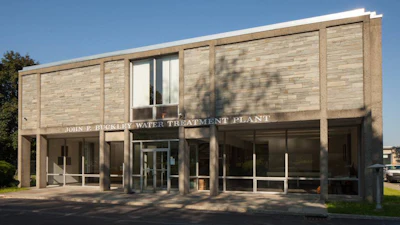
Persistent algae blooms in the Tomhannock, paired with Troy's outdated facilities, have made equipment updates at the John P. Buckley Water Treatment Plant a necessity, said Kevin Rose, a biosciences professor at Rensselaer Polytechnic Institute (RPI).
“Aging infrastructure is a sister problem of watershed health, but it still means higher maintenance costs, plus there’s lead-based piping in many places,” Rose in an interview with Water Daily. “Lead can flake off from pipes and get into drinking water, which means adding treatments to stabilize the pH.”
Keeping a balance
In Troy’s case, replacing or upgrading aging lime feed equipment will ensure pH remains in the “sweet spot” of 7.0-8.0 pH. Once pH is balanced, orthophosphate is added to the water, forming a durable mineral-like crust that acts as a natural sealant.
“Beyond increasing pH and buffering capacity, you’ll get less metal going in the water, which is good for the longevity of the whole system,” said Rose, also director of The Darrin Freshwater Institute at RPI. “A value of 7.0–7.5 would be best for treated drinking water. It's close enough to neutral to enable good disinfection, and high enough to keep pipes from corroding. That will even help with the maintenance costs in your house, though that savings will be spread over decades.”
While a drop in lead levels will take time, residents still have tools to monitor the program's progress, Rose added.
“Every municipal water supply puts out reports,” said Rose. “People can look at EPA thresholds for alkalinity, because those will be corrected first. And when you correct those issues, then you’ll have benefits when it comes to metals in drinking water.”
Revamping key treatment infrastructure simultaneously bodes well for Troy’s water future, though the region should also keep focus on protecting its watershed, said Rose. Groups like the Rensselaer Land Trust have discussed purchasing nearby land or development rights to create protective buffers for this vital resource.
Meanwhile, officials are praising a statewide initiative designed to reduce infrastructure costs and improve public health.
“The approval of $74 million in grant funding and low-cost financing today highlights Governor Hochul’s focus on clean water for all New Yorkers and our environment,” New York State Department of Environmental Conservation commissioner Amanda Lefton said in the press release. “This latest economic investment combining state and federal funds assists municipalities and provides countless benefits to residents by supporting the upgrade of aging systems in need of repair or replacement.”