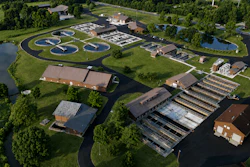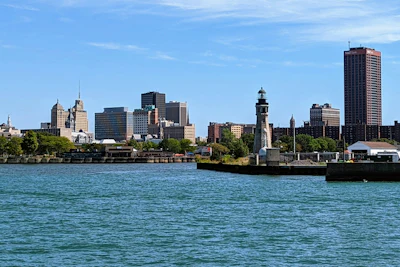

Buffalo has completed a $72 million upgrade to its Bird Island Wastewater Treatment Facility, marking the first phase of a broader effort to modernize aging treatment infrastructure and reduce combined sewer overflows into the Niagara River.
The Bird Island facility was originally built in the 1930s and underwent major upgrades in the 1970s. The newly completed work increases treatment capacity and reliability, with a particular focus on handling the high wastewater flows that reach the plant during intense rain events. Buffalo's combined sewer system collects both sewage and stormwater, meaning heavy rainfall can overwhelm the system and contribute to untreated discharges into area waterways.
The project is part of the Buffalo Sewer Authority's Queen City Clean Waters initiative and long-term control plan, which is being implemented in coordination with the New York State Department of Environmental Conservation. The broader program targets aging infrastructure, regulatory compliance and reductions in combined sewer overflows affecting the Niagara River and its tributaries.
The $72-million project also offers a notable look at how Buffalo is financing its wastewater capital program. The New York State Environmental Facilities Corporation provided $32 million in grants through the Water Infrastructure Improvement program and Clean Water State Revolving Fund, including federal infrastructure-law funding. DEC contributed another $10-million grant, while the remaining $30 million came through low-cost Clean Water State Revolving Fund financing.
That financing structure could ultimately save nearly as much as the project itself cost. EFC estimates the grant and low-cost financing package will save Buffalo more than $70 million in interest compared with traditional borrowing. Grants covered more than half of the project's $72 million price tag.
And Bird Island isn't finished.
EFC has committed another $137 million toward Buffalo wastewater projects that are already underway or expected to begin in the near term. DEC has separately awarded the Buffalo Sewer Authority $40 million since 2021 for seven projects connected to implementation of its long-term control plan. Future phases will include additional treatment upgrades and improvements throughout the sewer system.
"The completion of Phase 1 at Bird Island is a significant milestone achieved under the auspices of the Queen City Clean Waters initiative and the long-term control plan," Buffalo Sewer Authority Principal Sanitary Engineer Rosaleen B. Nogle said in the state's announcement. She said the investments are intended to reduce combined sewer overflows into Buffalo-area waterways.
For Buffalo, the completion represents more than a one-time plant rehabilitation; it's the first completed piece of a longer capital program aimed at bringing decades-old wastewater infrastructure up to modern treatment demands while giving the system greater capacity to absorb the wet-weather flows that have historically contributed to overflows.
“Improving the Niagara River’s water quality is essential to protecting the region’s public health, wildlife, and habitat, and helps drive economic development," New York State Department of Environmental Conservation Commissioner Amanda Lefton said.