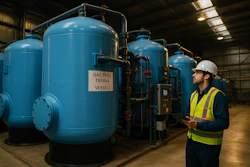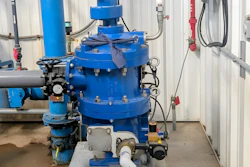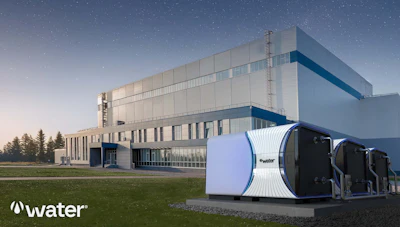
VVater, an American water company, announced that it has been awarded a multimillion-dollar contract by a Fortune 50 global food and beverage company to deliver an advanced water treatment solution at one of its major U.S. manufacturing facilities in Texas on Jan. 7.
Under the agreement, VVater will handle 100% of the facility's discharge water, and transform 40,000 gallons of previously contaminated industrial water per day into safe, potable drinking water. This will reduce freshwater dependency while strengthening operational reliability in a region facing increasing water stress, using VVater's Farady Reactors.
"For large industrial operators, water is no longer a utility; it's a strategic input," said Kevin Gast, chairman and CEO of VVater. "Companies that run continuously and at scale need certainty, resilience, and control. That's where VVater comes in, and in this particular case, our customer did not have years to wait for permits, construction, and retrofits. They need solutions that can be designed, deployed, and operationalized on real-world timelines."
Industrial manufacturers across the U.S. are facing rising water costs, stricter discharge regulations, and heightened scrutiny from regulators, investors, and consumers. VVater's solution enables facilities to close the loop on water use, converting impaired water into a dependable, on-site drinking water supply while reducing exposure to supply disruptions and compliance risk. By treating water at the point of use, VVater aims to help industrial operators lower long-term operating costs, minimize infrastructure dependencies, and insulate production from regional water volatility.
This engagement reflects a broader trend across U.S. manufacturing, where Fortune-scale operators are transitioning away from centralized, legacy water systems toward decentralized, high-performance solutions that deliver measurable outcomes.