Federal funding, aging assets, and climate stress converge to drive record project volume
America’s wastewater infrastructure is on the cusp of a construction surge in 2026, with hundreds of municipal systems moving long-deferred upgrades to the top of the agenda. The catalyst: a combination of aging plants, mounting climate impacts, and an influx of federal and state funding that’s now primed for deployment.
According to a December analysis from Government Market News, 2026 is shaping up to be one of the busiest years for wastewater capital investment in recent memory.
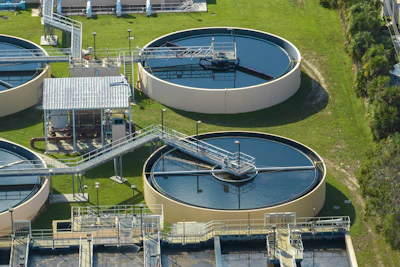
Utilities across the country are preparing to launch major treatment plant expansions, sewer separation projects, and full-plant modernizations. Many are motivated not by growth, but by necessity, with outdated facilities increasingly unable to meet today’s regulatory, environmental, and service demands.
The scale of the need is staggering. The U.S. EPA’s most recent Clean Watersheds Needs Survey estimates a $630 billion shortfall in clean water infrastructure over the next two decades. With more frequent extreme weather, tighter water quality standards, and communities facing permit deadlines, that gap is now driving action.
A shift from planning to procurement
Unlike past cycles, this wave is not theoretical. Design work is well underway in cities from Sandpoint, Idaho, to Brentwood, Mo. Projects range from emissions retrofits and SCADA upgrades to full-system overhauls and nutrient-control enhancements.
In Bellingham, Wash., a $40-million upgrade to the Post Point Wastewater Treatment Plant will modernize sludge incineration systems and emissions monitoring — with contracts expected to roll out beginning in 2026 and construction continuing through 2030.
Josephine Municipal Utility District in Texas will triple capacity and add new force mains and lift stations to meet state environmental requirements.
And in Sandpoint, Idaho, voters approved a $130-million bond to fully replace the town’s obsolete plant.
These projects represent an urgent national shift from “someday” to “shovel-ready.”
Why this matters to Utilities and vendors
For wastewater professionals, the implications are significant:
- Procurement pressure will rise. Engineering, equipment, and construction capacity may tighten as hundreds of projects go out to bid. Utilities planning major work should move quickly to lock in partners or prequalify vendors.
- Competition will increase for funding and for talent. With billions in Clean Water State Revolving Funds and WIFIA loans in motion, project sponsors must be prepared with strong financial planning, permit-ready designs, and clear community benefits.
- Advanced treatment is becoming the default. Sustainability and compliance goals are pushing more projects to include nutrient removal, energy recovery, real-time monitoring, and emissions control. Vendors with these capabilities will be in demand.
For engineering and construction firms, this is a rare moment of synchronized demand across jurisdictions.
For utilities, it’s a test of preparedness: the ability to secure financing, fast-track design, and manage large capital programs under tight regulatory timelines.
Water Daily’s take
At Water Daily, we see this surge as the front edge of a multi-year transformation in wastewater infrastructure. Utilities that act early will be best positioned to secure top-tier partners and favorable financing. Those who wait may face higher costs, fewer options, and greater compliance risks.
We’ll continue to monitor project rollouts, funding developments, and technology trends as this next wave of infrastructure builds, and, as always, bring the operational and financial angles utilities need to make smart, timely decisions.
Got a project or procurement coming in 2026? Let us know. Water Daily is tracking the next generation of treatment investment across North America.