When Arizona State University researchers analyzed NASA satellite data earlier this year, they discovered how rapidly the Colorado River Basin’s groundwater supplies are declining.
Between 2002 and 2024, there was a total loss of 27.8 million acre-feet of groundwater. 68% of that loss was in the lower part of the basin, which lies mostly in Arizona.
It’s research that confirms some of the concerns that have been voiced in Arizona, and subsequent action that has been taken to preserve supplies.
Just a few years back, Arizona Gov. Katie Hobbs announced the Arizona Department of Water Resources (ADWR) would stop issuing groundwater certifications for residential development if a 100-year water supply couldn’t be proven. And in fast-growing areas like Buckeye and Queen Creek, that has been the case.
How the 100-year supply mandate changes development
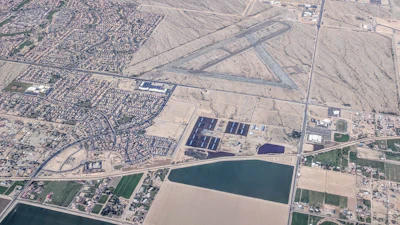
In 2000, the population of Buckeye, Ariz., was 6,537. Today, the city boasts 125,000 residents and, it’s been said that at full buildout, the population could reach 1 million.
A big part of this growth, however, hinges on the availability of water supplies.
In early 2023, ADWR released the Hassayampa Sub-basin Groundwater Model report. That report showed the sub-basin—the main source of water for Buckeye—was 15% short of the amount of water it would need to adhere to the 100-year assured water supply program.
 Buckeye, Ariz.
In Arizona, there are two types of water providers in active management areas: designated and undesignated. In areas served by an undesignated provider, developers that want to subdivide land for residential development must prove there’s 100 years of water available. This involves going to the Arizona Department of Water Resources, doing an analysis to check water supply, and, if the assured supply is there, the developer receives a certificate.
As Maxwell Wilson, the city of Phoenix’s Water Resources Management Advisor, explained, the decision to pause certificates is based on supply.
“When the department of water resources updated their groundwater model, it showed that all the groundwater in the valley, and then some, was effectively spoken for,” Wilson stated. “Thus, there would be no additional water available for more certificates moving forward.”
Buckeye and Queen Creek are two cities that fall under the undesignated water provider umbrella. In light of that, residential development in those areas has stalled to some degree.
The push to diversify water sources
The question these communities are left with now is: how can we diversify our water portfolios?
When you look at a city like Phoenix, you see substantial investments being made in support of water reliability and sustainability.
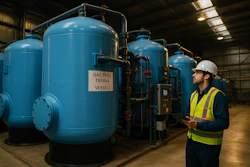
One initiative is treating recycled water to such a high standard and quality that the city can put it right back into distribution systems. Phoenix is in mid-construction on its first water purification plant, with plans for a second. The city also completed a feasibility study for a large advanced water purification facility in southwest Phoenix that will be open to regional partners.
At the same time, all the Valley cities are actively engaged in work to expand the Bartlett Dam, with the intent to catch more water during really wet years. This project is likely to be online in the mid-2030s.
Phoenix has also invested in infrastructure along the Salt Verde River, very recently adding in a large $280 million water main to move that water north into pressure zones where they operate. Wilson describes the ability to access that pipeline as “the crucks of our drought planning.”
The city has received some level of federal funding for these projects, but a large portion comes from ratepayers over time.
“We certainly don’t take for granted how valuable that support is,” Wilson noted.
Balancing costs and infrastructure demands
Water systems are naturally designed to operate around specific water supplies, whether that’s groundwater drilling or surface water use. When changes are made to that resource mix to access alternative water sources, that impact is felt.
“Invariably, that new water resource is not in the same place and of the same quality as the previous water resource,” Wilson said. “You have to develop new infrastructure to move that water around.”
Case in point: the Salt Verde water main mentioned above.
But as Wilson notes, that investment—as we move into this period of less Colorado River availability—has been worth it to the city of Phoenix.
“Having a system that runs on renewable supplies allows investment to come to The Valley because they know we have reliable, long-term supplies and we’ve invested in backups,” Wilson shared. “It also allows us to have the kind of community we want, with supplies that are reliable not just for ourselves and our children, but for our great-grandchildren.”
Lessons from a city with a diversified water portfolio
Today, 98% of the water in Phoenix that’s delivered to customers on a daily basis is surface water. Only 2% reliance is groundwater.
When asked what kind of lessons he’d share from the journey to this point, Wilson harped on time: “Everything takes longer than you think it will, so you need to start today. Frankly, time isn’t on our side in a lot of cases.”
For cities like Buckeye and Queen Creek, that can mean investing in water purification, but it can also mean developing water conservation programs that, in Wilson’s words, “help customers feel good about every drop of water they use.”
In Phoenix, for instance, if residents have grass they don’t use, there are financial incentives to remove it. The city will pay residents $2 per square foot for removed grass, which they can then use to fund a desert-style landscape.
It’s just one of many programs the city offers, which further takes pressure off the water resource portfolio.
As Wilson puts it: “At the end of the day, the city’s residents are the ones who save water, not us. All we can do is help them do it.”