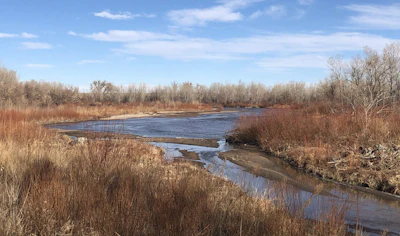

As drought remains a critical threat in the western U.S., Colorado Springs has started exploring alternative methods for water reuse in the future
In Colorado, every drop of water counts. It has to. Since 1980, the state’s population has doubled from 2.9 million people to more than 6 million. In light of its growing population and in an attempt to mitigate the prominent drought threat in the western U.S., many of the Rocky Mountain State’s larger cities have prioritized water conservation programs and reuse efforts.
Leading the charge on these endeavors are Denver, Aurora, Castle Rock, and Colorado Springs. Each city has taken its own unique approach to water stewardship and reuse, but the latter has had to be especially innovative. Being the largest city in the state that doesn’t reside on a lake or a major stream, Colorado Springs has to be self-reliant where water is concerned.
“Since we’re not on a major conveyance waterway, it means we have to do more things through pipelines and pumps rather than utilizing existing rivers,” said Jenny Bishop, project engineer for Colorado Springs Utilities. “Fountain Creek, our local creek, is small, so we can’t rely on it for transporting water like other entities do. We have to import water since it’s not available locally.”
As a result, the city is studying the implementation of indirect potable reuse (IPR), a process that treats wastewater, releases it into a natural system like a river or reservoir, and then recaptures it for further treatment and drinking water use. But before diving into Colorado Springs’ water future, it’s important to understand what brought the city to this point and how its reuse efforts have evolved over the past few decades.
From purple piping to potable systems
Historically, Colorado Springs’ reuse efforts have focused on non-potable water, or water that doesn’t meet drinking water standards. In the 1960s, that took shape in underground purple pipes that carried treated water to be used for reasons outside of human consumption.
“We took that water and reused it within our city boundaries,” Bishop explained. “We primarily used it to irrigate golf courses, college campuses, and for cooling towers within power generation facilities.”
Twenty years later, in the 1980s, Colorado Springs developed water exchanges, which are the main driver of the city’s water reuse efforts today. The system is especially valuable for Colorado Springs, as it allows the city to divert and store water in reservoirs for later use without physically transporting it. Considering the region’s topography has thousands of feet of elevation changes, transporting water is no easy task.
Unlike systems that require pumping water uphill, water exchanges allow Colorado Springs to avoid the “elevation problem” by diverting and storing water in reservoirs at higher points in its water system.
“The exchange system is really good at retiming our water so we can put it back into storage and use it whenever we want,” Bishop said. “It’s more efficient for us to retime and exchange that water higher up in our system so that gravity can pull it down to the lower points.”
While water exchanges work well for Colorado Springs at present, using an IPR system would offer even more benefits for the city and its surrounding regions in the next three to five years.
How IPR would work in Colorado Springs:
- The city would pull reusable water off of Fountain Creek south, and downhill, of the city.
- The water would be stored in a new reservoir to be constructed adjacent to an existing pipeline.
- The water would be pre-treated before it enters the existing Southern Delivery System Pipeline up to the utility’s Bailey Water Treatment Facility.
- The water would be purified to drinking water standards at the Bailey facility. Since the pipes are already in place, an IPR system could be a more cost-effective regional water solution, as other water providers in the Pikes Peak region wouldn’t have to each build their own systems.
- The water would be distributed into the drinking water system.
Moving toward IPR
Bishop noted that Colorado Springs’ need for an IPR system isn’t urgent. However, considering the city has been “water short” for more than 100 years and the threat of drought remains evident, it doesn’t hurt to have another water reuse “tool” at its disposal.
“IPR is definitely a tool for drought response,” she said. “And because a reservoir would be built to help manage this system, it becomes another storage vessel we could right-size to carry us through times of drought.”
The Arkansas River, the basin that Colorado Springs is located in and one of its main sources of water, has a reduced streamflow at certain times throughout the year. As a result, the city can’t always use its exchange system as effectively. “IPR would allow us to pull that water off of Fountain Creek instead,” Bishop stated.
And while Colorado Springs wouldn’t immediately reap the benefits of an IPR system, eight other water suppliers in El Paso County would.
“For regional entities that don’t currently reuse their water in their drinking water system, collaborating with Colorado Springs through IPR allows them to access their reusable water supplies in a more cost-effective way,” she said.
While it may take a different approach to water reuse than other states and municipalities, Colorado Springs has been at it for decades and continues to look for tools as well as systems that will improve its stewardship efforts.
“We want to be good stewards of water throughout the whole county so we can take meaningful steps toward water security,” Bishop said. “Our goal is to steward our water supplies and infrastructure to help Colorado Springs and those around us as well.”