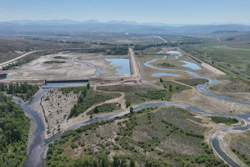
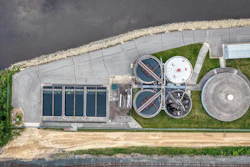
Two groundwater recharge projects—London West Pond in Tulare County and Traver North in Kings County—are advancing in California’s Central Valley to capture floodwater and replenish overdrafted aquifers.
Funded partly by a $50-million state grant, the basins will divert high flows from the Kings and Tule Rivers, targeting a combined 18,000 acre-feet of annual recharge.
The projects, led by local Groundwater Sustainability Agencies (GSAs), align with the Sustainable Groundwater Management Act (SGMA) to curb over-pumping by 2040.
Why it matters for business: The Central Valley, generating $50 billion annually in agriculture, faces a groundwater deficit of 2 million acre-feet per year. These basins mitigate risks of fallowed farmland and water rationing, stabilizing agribusiness supply chains.
For water tech firms, the projects signal growing demand for Flood-Managed Aquifer Recharge (Flood-MAR) solutions, with California allocating $1.5 billion for water storage since 2021. Investors should note the potential for public-private partnerships as GSAs seek scalable tech.
The big picture: SGMA’s mandates are reshaping California’s $60-billion water market, forcing utilities, farmers, and industries to adopt innovative storage solutions. London West Pond and Traver North are early wins in a broader push to integrate floodwater capture into water portfolios, potentially unlocking billions in infrastructure spending by 2030.


By the numbers:
- London West Pond: 200 acres, ~10,000 acre-feet/year recharge, $30 million budget.
- Traver North: 150 acres, ~8,000 acre-feet/year, $20 million budget.
- Economic stakes: 500,000 acres of farmland at risk without SGMA compliance.
- Market growth: U.S. water management tech market projected to hit $18 billion by 2030.
What’s next: Construction is set to accelerate in Q3 2025, with GSAs eyeing additional federal funds from the $1.2 trillion Infrastructure Investment and Jobs Act. Businesses should watch for water rights disputes, as floodwater diversions could trigger legal battles with downstream users. Expect RFPs for monitoring tech and data analytics to optimize recharge efficiency.