California’s rainy season is making headlines, thanks to heavy precipitation that has continued to pound the state. While causing floods, mudslides and other disruptions, the storms are also filling reservoirs and reducing drought to virtually nil.
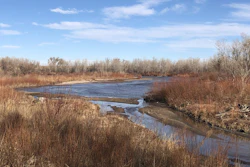
An exceptionally wet winter would be a blessing for drought-prone regions like the Monterey Peninsula. In December, the scenic central California enclave began preparing critical infrastructure for its Aquifer Storage and Recovery program, or ASR. Like it does every winter, California American Water is partnering with the Monterey Peninsula Water Management District to capture excess rainfall from the Carmel River. Diverted flow is treated and deposited into the Seaside Groundwater Basin, leveraging the aquifer as a natural warehouse for the region’s seasonal water needs.
Whereas traditional dams stockpile water in open lakes, ASR stores it deep underground in the spaces between rocks and sand. Observers like Cal-Am external affairs director Evan Jacobs view the project as a “savings account” in reverse - you make deposits on rainy days to ensure the region is protected during dry ones.
“The biggest challenge on the Monterey Peninsula is this is an area hit by climate variability,” said Jacobs. “You don’t know when and if the rains will come. So, let’s maximize our water supplies to provide people with that resource all year. Let’s be ready for those winter storm events.”
The ASR program captured 1,656 acre-feet of rainwater during the 2022-23 winter season – another 1,518 acre-feet was injected into the Seaside Basin in 2024, according to Cal-Am. Although the program procured a mere 70 acre-feet of water during recent drought years, the 2025-26 season is off to a strong start after a series of powerful early-season storms, Jacobs said.
ASR season in Monterey begins on or after Dec. 1, when flow levels on the Carmel River meet a state-mandated 40 cubic-feet per second. With that flow rate triggered, excess water is withdrawn and banked in the Seaside Basin, which serves 100,000 residents amid 680 miles of pipeline and over 100 storage tanks.
Based on long-term historical precipitation and streamflow data, ASR can produce upwards of 470 acre-feet of water for the region annually. Project permits allow injection of up to 29.2 acre-feet daily during winter, relative to flow conditions in the Carmel River.
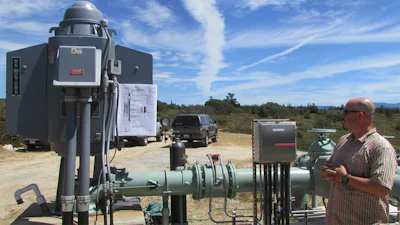
Cal-Am spent late autumn enhancing ASR infrastructure, a process incorporating the inspection and sterilization of 13 seasonal wells. Meanwhile, workers with the wastewater utility must be ready for anything over the course of a rainy season, which typically occurs from November through March.
“Last winter, a power panel for one of our major wells was hit by a falling tree during a storm,” Jacobs said. “Bringing that well online was important to maximize our ASR production. It’s a big, complex system, and these are the kinds of things you deal with.”
Not just a ‘nice-to-have’
ASR in the region is bolstered by Pure Water Monterey, a wastewater recycling project developed by the Monterey Peninsula Water Management District alongside treatment agency Monterey One Water.
Launched in 2021, the initiative provides high quality drinking water to residents while supporting the Salinas Valley with essential irrigation. Although a major water supplier for the Monterey Peninsula, the Carmel River is also a source of federally protected steelhead trout, requiring pumping permits from agencies like the state water resources control board.
Navigating these hurdles provides the peninsula with a significant buffer during droughts or system failures, said Monterey management district senior hydrologist Jonathan Lear.
“Pure Water Monterey has given us an operational reserve over these last five years,” said Lear. “If there’s a plant outage or other emergency, the community still has an uninterruptable water supply. Then the plant comes back on and rebuilds that reserve.”
The program secures a six-month cushion for the region, boosted by an ASR effort that offers a more economical storage alternative to standard above-ground reservoirs. While a retrofit for the aging Los Padres Dam could cost $100 million-$200 million, re-drilling an active ASR injection well is a comparatively modest expense, Lear said.
“(Reservoirs) have a larger footprint and are more expensive, while wells for ASR have a 30-40 year lifetime, then you can just re-drill,” said Lear. “It costs $6 million-$8 million for drilling, which is nothing compared to long-term maintenance of a surface reservoir.”
In an era of climate volatility, expanding storage for the dry season is more a necessity than a “nice-to-have,” said Jacobs of Cal-Am.
“ASR is part of our water-supply strategy,” Jacobs said. “It protects the Carmel River and reduces year-round pumping, and it’s a cost-effective source of supply.”