
 Climate-related news tends to highlight the dramatic transformations to our ecosystem, from drought-related wildfires to disastrous floods. Yet, there are also environmental changes happening largely out of sight, noted Kyra Adams, lead author of a recent NASA study on seawater intrusion into coastal water supplies.
“The climate impacts we focus on are visible, but the water (that we drink) is under our feet,” said Adams, a groundwater scientist with NASA’s Jet Propulsion Laboratory in Southern California. “How sea-level rise impacts this groundwater is what we wanted to address with the study.”
Adams and her colleagues project that saltwater will contaminate underground freshwater in approximately three-quarters of global coastal areas by 2100. In addition to making water both undrinkable and unusable for irrigation, this contamination can potentially harm ecosystems and corrode public infrastructure.
“Saltwater intrusion” manifests below coastlines as a constant tug-of-war between freshwater and saltwater. Oceanic pressure continually pushes seawater inland, but differences in density usually keep the fresh and salty water separate.
Planetary warming has disrupted this balance, with rising seas intensifying the natural forces that drive saltwater landward. Published last November, the JPL study illustrates a future problem having negative impacts today; Adams saw this for herself when conducting PhD research in the low-lying Delaware shore during the mid-2010s.
Saltwater moving slowly inland is killing the state’s freshwater wetland plants, Adams said. The invasion of salty water onto normally dry land is also leading to desiccated “ghost forests” along the coast, as many species of trees cannot handle the change in environment.
Ongoing seawater infiltration can also have an immediate impact on sewer pipes and other subsurface systems, added Adams.
“We don’t notice corroding infrastructure until there’s too much damage,” Adams said. “Knowing these changes are in motion was the motivation for the study. If it’s already happening in nearshore areas, we can only imagine how much worse it will get in the future.”
No time to waste
The JPL paper evaluated more than 60,000 coastal watersheds worldwide, mapping how diminished groundwater recharge and sea level rise will contribute to future saltwater intrusion. Rising sea levels alone are projected to drive salty discharge inland in 82% of the watersheds studied, significantly impacting vulnerable low-lying regions such as Southeast Asia, the U.S. Gulf Coast, and much of the U.S. eastern seaboard.
The Hampton Roads Sanitation District (HRSD), the governmental agency responsible for wastewater collection and treatment in southeastern Virginia, is not waiting around to proactively address saltwater migration in the region.


Through its SWIFT (Sustainable Water Initiative for Tomorrow) program, the agency is replenishing the depleted Potomac Aquifer with highly purified water, following decades of excessive groundwater pumping that allowed coastal saltwater to push inland.
Injecting millions of gallons of treated “SWIFT water” into the aquifer will boost its hydrostatic pressure, ideally pushing back encroaching seawater and preventing further intrusion, said HRSD hydrogeologist Dan Holloway.
Replenishing the aquifer offers an additional benefit against saltwater migration by slowing or reversing the sinking of coastal lands, a process known as subsidence.
“Doing this SWIFT project will help raise the land and offset some of these problems,” Holloway said. “As the water table gets higher, you have pipes that may be more constantly submerged. If you have a failure in the pipes, that’s raw sewage leaking out.”
JPL researcher Adams said that recurrent extreme rainfall events can lead to greater salty surges onto dry land, even as freshwater replenishes local aquifers.
“Aquifers move slowly, too,” said Adams. “Shallow aquifers may refreshen quickly, but if it’s a deeper aquifer, it could take a long time.”
More data needed
The JPL study indicates that slower freshwater recharge alone could lead to saltwater incursion in 45% of the coastal areas examined. A continuous influx of salty water could also compromise standard water treatment, as most plants aren’t designed to effectively remove dissolved salts, said Holloway.
In the meantime, a group of HRSD “salt chasers” continue to clean up salty tidal inflow in Virginia’s sewer system. The sanitation district tracks salination levels via special sensors, also looking for defects in piping. Holloway said that replacing aging sewer pipes with high-tech solutions is a viable short-term fix.
“We want to be aware of our design standards and construction, and making sure we have infrastructure that’s more resistant, like high-density polyethylene pipes,” said Holloway.
U.S. coastal regions are combating saltwater intrusion by injecting freshwater directly into aquifers. For flood-prone coastal zones in New Jersey and the Carolinas, dunes and barriers offer a defense against the advancing ocean. Converting the land itself is another possibility, exemplified by states shifting freshwater farms into saline marshes, said Adams.
Further research is needed to understand the full scope of a challenge that will only worsen in the coming decades, Adams said. Despite the complexities introduced by varying local topographies and geographies, continuous data collection should be an imperative in the years ahead.
“Regardless of the political climate, the challenge is these earth-system problems go for longer than any presidential administration,” said Adams. “These problems are going to be present no matter what, so communities can focus on monitoring efforts, and getting good momentum beyond just societal sentiment.”
Citizens can collaborate with local climate-focused organizations, many of which are experiencing budget reductions from the current presidential administration. Adams advised anyone wanting to help to heed scientific findings and begin their advocacy with a small, local landmark.
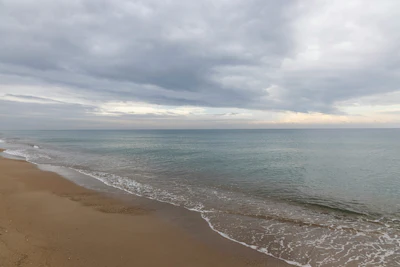
“This work can be overwhelming, so focus on a beach you love,” Adams said. “Citizens scientists can pull observations on water levels and gather data directly from their communities.”