Vanessa Cartwright is a life-long resident of Jefferson Chalmers, a Detroit neighborhood known for its distinctive canals, which were frequently navigated by bootleggers during the city’s Prohibition era. Cartwright raised three children in a community dubbed the “Venice of Detroit,” even as its charming waterways have become an increasing source of concern.
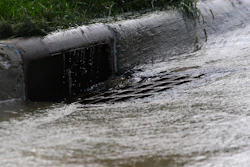
Storm-spurred sewer backups and overbank flooding from the canals have flooded basements in Jefferson Chalmers five times between 2011 and 2021. During the 2021 flood, residents awoke to sewage-drowned basements and an aging stormwater/sewer system overwhelmed by heavy rainfall.
“It was really terrible,” said Cartwright. “The expressways were flooded from east to west. I lost a lot of pictures and clothing in my basement. Lots of things were destroyed.”
A series of devastating floods have not chased Cartwright or her neighbors from their unique surroundings. However, a neighborhood oriented around a canal system remains vulnerable to climatic shifts that are only expected to worsen in coming decades, said observers.
In the short term, community organizations including the Detroit Area Disaster Recovery Group are lobbying for upgraded infrastructure that would ease the burdens of living on a flood plain. The delay in getting repairs done is frustrating for LeJuan Council, who started the recovery organization after the 2021 floods.
Council said her community has layers of issues that make a workable solution challenging. While some people experience canal flooding, others like Council are prone to basement backups exacerbated by extreme rains.
“The issue overall is we don’t get people speaking about us,” Council said. “I’ve been to 250 community meetings and townhalls. All of our problems are different. There’s old sewer systems and 100-year floods every three years.”
Ultimately, the city’s infrastructure can’t handle the demands of a changing climate, added Council. Stopgaps like sandbags and Tiger Dams – a flexible tube made of permeable fabric or polymer material – offer little protection when widespread development continues to overload Detroit’s decaying foundation.
“The city continues to grow while living on graham cracker crust infrastructure,” said Council. “If the infrastructure my house is sitting on is crumbling, what does that mean for me and my house?”
Community demands action
 Lake St. Clair, leading into the Detroit River and Lake Erie.
Jefferson Chalmers residents and advocates are demanding immediate action for a community situated on what was once a massive swamp. Currently, the neighborhood is part of the city’s basement backup protection program, an initiative funded through the American Rescue Plan Act to install backwater valves and sump pumps in vulnerable homes.
Detroit is also expanding an existing sewer repair effort to dozens of neighborhoods hit by the 2021 flood – a collaboration between the city’s housing and revitalization office and the Detroit Water and Sewerage Department was established last year, serving an additional 22 flood-impacted neighborhoods.
In 2021, the Federal Emergency Management Agency placed Jefferson Chalmers in a designated flood zone, requiring residents to purchase flood insurance and potentially lose out on federal resources. Since then, area policymakers and development groups have been seeking ways to change that designation.
For example, residents ask if fixing seawalls would abolish their community’s floodplain status. But Joshua Elling, chief executive officer of the nonprofit community development corporation Jefferson East, Inc., said that simply fixing private seawalls wouldn’t be enough to delist Jefferson Chalmers.
According to the office of Detroit Mayor Mike Duggan, some combination of levees, floodwalls, canal closures and stop logs are required for floodplain removal. Elling has suggested raising streets alongside the Fox Creek canal, or even letting residents fix their private seawalls if they can afford it.
For now, Elling doubts whether upgrades or basement protection programs can stave off the next disaster.
“It’s a mess down here, so we’re just trying to move the conversation forward,” said Elling. “I just worry we’ll have another storm and get hit again.”
Better outreach a must
For residents like Cartwright, poor communication from the city has been a source of frustration, particularly when trying to voice concerns about a proposed pump station in her neighborhood. Construction of the Great Lakes Water Authority pump station — meant to bolster regional water infrastructure and prevent flooding — has generated so much dirt and dust that Cartwright sometimes has to keep her windows closed.
Industrial infrastructure is ill-suited for a residential area, said Cartwright, an opinion she wishes more Detroit officials would heed.
“The city should be doing a lot more research before voting on a pump station,” Cartwright said. “This is not an industrial area, but I don’t think the city understands that.”
GLWA representatives have said the $138 million station is vital for flood prevention in light of worsening extreme weather events. Residents maintain the facility does not address the core issue of being downstream from Metro Detroit’s stormwater network, which funnels much of its flow into the community.
Councilmember Latisha Johnson, who represents Jefferson Chalmers and 21 other neighborhoods in Detroit’s District 4, said the city of Detroit and the GLWA haven’t done enough outreach on a project already underway for years.
“Most of the concerns I’m hearing are about community engagement,” said Johnson, who joined city council in 2022, well after discussion began on the pump station. “I was trying to understand with the community what was being proposed about the pump station, but everything had been decided by then.”
GLWA has secured a permit for the structure, yet questions persist about what exactly will be built in an area that is residentially zoned. In the interim, Johnson hopes for better shoreline protection through the use of riprap – large rocks stacked to absorb canal water impact. The council member is also exploring funding for residents to restore their seawalls, a repair that can cost over $50,000, depending on the structure’s condition.
Johnson said that shoring up Jefferson Chalmers against flooding would yield benefits beyond its immediate borders.
“The challenges we’re solving for don’t just impact Jefferson Chalmers – about 75% of people living in District 4 had backups in their basements during the 2021 floods,” Johnson said. “Jefferson Chalmers residents should not feel that (the city’) focus is elsewhere, or that they live somewhere that does not feel like it used to as a residential community.”