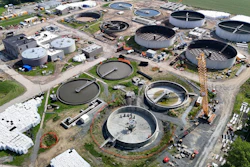
 In July, the San Antonio Water System (SAWS) secured a $26.7 million state loan to design an expanded underground water repository at its H2Oaks Center site. Photo: SAWS
San Antonio is a magnet for newcomers – the Texas city ranked fourth nationwide for new residents gained from 2023 to 2024, per data from the U.S. Census Bureau.
More people necessitates additional water infrastructure, which the city expects to have covered as well after the recently announced expansion of its aquifer storage and recovery system, or ASR. In late July, the San Antonio Water System (SAWS), a utility over 2 million people, secured a $26.7 million state loan to design an expanded underground water repository.
SAWS currently treats up to 30 million gallons of water per day, a figure that will double upon full scale-up of its storage network at the H2Oaks center in Bexar County. Utility officials view storage expansion as a necessarily proactive move in a state where water scarcity looms large.
“This is like a savings account that we can put water into when we need access,” said Robert Puente, president and CEO of SAWS. “We’ve had drought for a couple of years, and this will give us more water to store, depending on the weather.”
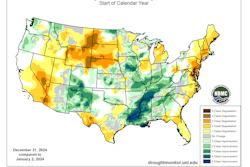
Parts of Bexar County remain in “extreme drought” status, per data from the U.S. Drought Monitor, while the San Antonio region has not been completely drought free for over three years. Parched conditions and high temperatures have prevented aquifer recovery, leading Texas Gov. Greg Abbott to declare a statewide disaster declaration in 2022.
When water supplies run low in the future, the expanded ASR will provide the city with 60 million gallons of water per day. More capacity means avoiding restrictions that can subject homeowners to designated watering days and times, rules that fluctuate apace with both drought severity and the health of the Edwards aquifer, a crucial nearby water source.
Expected for completion in 2030, the estimated $100 million water storage expansion will continue to harness the Edwards aquifer. Today, this water is pumped into the ASR site at the H2Oaks Center, then injected into a section of the Carrizo aquifer. Unlike the Edwards aquifer’s limestone caverns, the sandy composition of the Carrizo site slows the movement of water, allowing for a greater volume to be treated.
SAWS can then pump water from Carrizo to meet demand – the utility currently stores up to 220,000 acre-feet of water, more than four times the amount provided annually by the Vista Ridge pipeline that stretches from Burleson County to San Antonio. Water from the ASR facility must also be treated to the same standard as all other sources in the system.
“There is fresh water production from Carrizo as well as desalinated water, all mixing at the same plant,” Puente said. “These three sources will be treated and blended (after the ASR build-out), expanding our ability to use all of them for the public.”
Taking proactive measures
 In July, the San Antonio Water System (SAWS) secured a $26.7 million state loan to design an expanded underground water repository at its H2Oaks Center site. Photo: SAWS
The Texas Water Development Board awarded millions in loans to four regional water utilities, including SAWS, to fund expanded water storage and treatment. In addition to the $26.7 million loan for SAWS, the board approved $40 million for the Guadalupe-Blanco River Authority, $33.5 million for the Alliance Regional Water Authority, and $55 million for the city of Austin. All loans were administered through the State Water Implementation Fund for Texas, or SWIFT.
Following a severe drought in the 1950s, the board was established to address the state’s future water supply. Funding derives from a mix of state appropriations and federal programs, along with a variety of revenue and general obligation bonds, according to a TWDB spokesperson.
The SWIFT program, meanwhile, is designed to provide affordable assistance for regional projects outlined in the state water plan. Low-interest financing, extended repayment terms, deferred repayments, and incremental repurchasing are all part of the SWIFT package, the TWDB spokesperson said in an email.
“The TWDB believes no project is too big or too small, and the SWIFT program provides funding for a variety of water supply projects, from major reservoirs to pipelines, conservation, reuse, and water meter replacements,” the spokesperson said. “The SWIFT program finances all stages of projects: planning, design, acquisition, and construction, for projects recommended in the state water plan, which is the case for the SAWS ASR project.”
Proactively implementing water efficiency programs is vital for a region that faces both extreme drought and governmental scrutiny, said Puente of SAWS. In 1993, the Texas Legislature passed Senate Bill 1477, mandating that historic users of the Edwards aquifer reduce their pumping from 572,000 acre-feet to 400,000 acre-feet by 2008. San Antonio responded by implementing new conservation and recycled water measures – it also constructed its ASR plant, now called the H2Oaks Center.
SAWS is committed to continued investment in water management, as forecasts for the region show water demand rising 9% by 2050. Texas voters can approve additional funding for infrastructure this November by voting “yes” on Senate Bill 7, legislation that could funnel more than $20 billion into water-related projects through 2047.
“We are looking at these different funding sources,” Puente said. “The most important thing is water conservation, as unsexy as it is.”