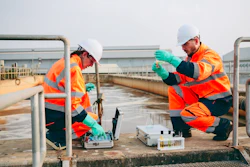
A multi-year infrastructure project beneath Indianapolis is complete, marking a new era of protection for the city’s waterways. Finished last fall, the DigIndy Tunnel System is designed to divert at least 95% of sewer overflows – or about five billion gallons annually - into treatment facilities operated by Citizens Energy Group.
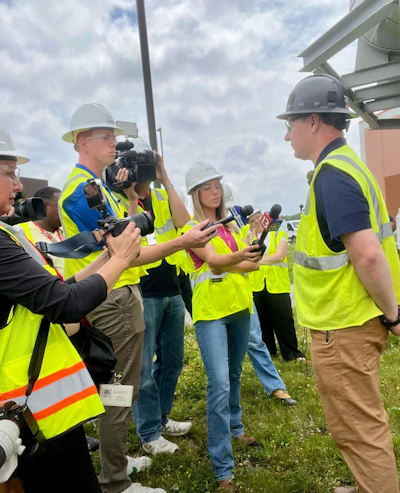
 A ribbon cutting ceremony to celebrate the completion of the long-in-process DigIndy Tunnel System.Citizens Energy Group
“One of the most obvious problems was this untreated water going into our surface water,” said Ann McIver, director of Citizens’ environmental stewardship team. “During wet weather events, the river is ‘flashy,’ meaning water levels rise rapidly, and you get a swift moving stream. As a result, waterways routinely experienced pollution during and after storms.”
Prior to completion, a mere quarter inch of rainfall was enough to trigger sewer overflows throughout Indianapolis, said McIver. The overall system covers 34 square miles, with 130 overflow points at six separate waterways.
Protecting the region’s water resources required a 14-year construction effort at a price tag of $2 billion. Tunnels were mined through bedrock to store and reroute massive volumes of wastewater - one mile of the system can hold 10 million gallons of sewage, according to Citizens.
In 2011, Citizens purchased the city's water and wastewater utilities for $1.9 billion, assuming full responsibility for the tunnel system's design and construction. Though a refurbished sewer network had been discussed since the ‘90s, the consent decree crystalized those plans – DigIndy became a means of both safeguarding local rivers and complying with rules set forth by the federal Clean Water Act, said officials.
As the largest civil project in Indianapolis history, DigIndy serves as a massive reservoir, capturing over 250 million gallons of overflow during every rain event. Major milestones during construction included the opening of the Deep Rock Tunnel Connector in 2017, the White River and Lower Pogues Run tunnels in 2022, and completion of all work last October.
Development of the six-segment tunnel system provided project managers with critical engineering insights and operational expertise, said Mike Miller, manager of the DigIndy capital program at Citizens. Initial work helped contractors master complex subsurface conditions, including adapting to an ancient reef formation found along Lower Pogues Run.
“The major result was that we took a much closer look at the geologic studies for the remaining tunnel sections to ensure there were no further surprises,” Miller said.
Digging mostly underground also minimized disruption from construction noise and traffic reroutes, he added.
“The project benefited from being implemented as a portfolio of projects, not a single dig,” said Miller. “That allowed the team to adapt construction approaches, contractor coordination and community outreach practices as work progressed .”
‘A generational investment’
Over the years, DigIndy evolved from a hidden utility to a community-facing initiative – an intentional effort to highlight a landmark public works commitment, said director McIver.
Murals decorated buildings near dig sites, while hand-painted manhole covers brought vibrancy to the long-in-process initiative, she said.
“The message to residents was that this isn’t just a compliance project,” said McIver. “It’s a generational investment in cleaner water, healthier neighborhoods and a renewed relationship between the city and its rivers. By pairing heavy infrastructure with visible, creative elements, Citizens aimed to reinforce trust and long-term value of DigIndy to the community.”
Managing construction fatigue required regular media updates along with face-to-face neighborhood meetings. Residents received advanced notice on traffic delays, as well as timelines for various phases of development. Funding for design, construction and ongoing maintenance came via sewer rate hikes, with a final rate case approved by the Indiana Utilities Regulatory Commission in 2018.
Citizens is now monitoring system performance to ensure it reaches its 95% total reduction target, which includes 97% of overflows from the Fall Creek watershed. More than 7 billion gallons of wastewater had been diverted as of mid-2025 by portions of the finished system, according to the utility.
Sewage diversion supports city sustainability goals, like the planting of 10,000 trees to absorb heavy runoff managed by DigIndy. Officials said the tunnel system was also built to handle extreme rainfall events brought about by accelerating climate impacts.
“DigIndy functions like a massive underground reservoir, storing stormwater and wastewater during intense rain events and releasing it for treatment when capacity is available,” said project manager Miller. “With 28 miles of tunnel and expanded treatment plant capacity, the system is specifically designed to manage larger, more intense storm events than the legacy system could handle.”