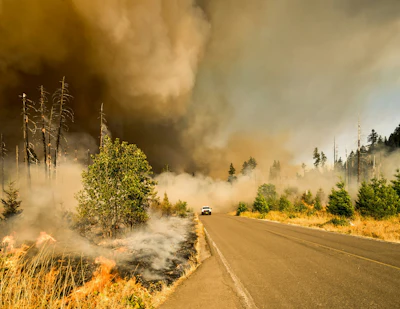
In the midst of the Pacific Palisades, Calif. wildfires, a series of water advisories were shared with residents. The main message: do not drink, cook with, or treat the tap water.
It’s a recent example of a broader concern: wildfires can contaminate drinking water.
We saw this unfold in the wake of the 2021 Marshall Fire in Boulder, Colo. For caution’s sake, residents that could return home were asked to boil their water or use bottled water as the state’s health department looked at water samples for toxicity.
It’s with good reason these protocols are in place. After the Camp Fire in Paradise and Magnolia, Calif. in 2018, local utilities running tests found high levels of benzene and other volatile organic compounds (VOCs) in portions of the public water distribution systems.
Not every wildfire will contaminate drinking water, but they all raise the possibility of it. For water utilities teams, it’s all about the response and reassurance to residents.
The science of post-fire runoff
When wildfires burn close to water sources, ash, sediment, and debris can wash into bodies of water. Within this runoff, there tends to be heavy metals like lead and toxic compounds from burned structures and household chemicals. The presence of said pollutants can overwhelm filtration systems and lead to more harmful byproducts.
While affecting source water, wildfires can also cause infrastructure damage that is cause for contamination concern. Going back to the 2018 Camp Fire example, high heat melted plastic service lines and water meters, leaching benzene and other VOCs right into the drinking water system. Quite toxic at even low concentrations, these materials are difficult to remove with standard water treatment methods.
To put this in perspective, California’s legal limit for benzene in potable water is 1 part per billion (ppb). (Federally, the limit is 5 ppb, as cited by the EPA.) The Camp Fire saw benzene levels reach 2,217 parts per billion.
Response tactics from water utilities
Twice a day, NASA satellites detect active wildfires. Not only have wildfires become more frequent in the past 20+ years, but also more intense, with a bigger footprint.
With these factors in play, water utilities companies are feeling the increased pressure to act quickly if and when wildfires do threaten drinking water systems. Here are some examples of how utilities can intervene before and after fires occur:
Proactive watershed management plans
When forests become overgrown, there’s more vegetation and underbrush that can feed the fire and amplify destruction—not just to the land, but to water supplies too. Land becomes water-repellent, and runoff that follows carries pollutants into potable water sources.
By partnering with land management agencies, water utilities can safely thin out excess trees and brush to break up fires, lower their intensity, and reduce the amount of harmful debris ending up in water sources.
The Denver Water “From Forests to Faucets program” has helped thin 120,000+ acres of forest around priority watersheds, protecting reservoirs from post-fire sedimentation.
Rapid advisory and monitoring responses
When the Tubbs Fire tore through Santa Clara, Calif. In 2017, the city’s water infrastructure experienced significant damage and benzene contamination was found. Santa Clara Water’s response and recovery went well beyond restoring service.
The utilities provider issued boil water advisories and defined “Do Not Use” zones, while deploying mobile water quality testing teams to sample hundreds of locations for fire-related contaminants. Working alongside public health officials, the EPA, and local emergency services, they coordinated messaging and testing—with a website and data dashboard built to inform residents of test results, timelines, and updates.
It’s a great example of quick on-the-ground responses, with feedback at every step.
Treatment upgrades and emergency filtration
In the event that water sources do become contaminated, water utilities may need to consider temporary or permanent upgrades, or both. It all depends on how severe and extensive the contamination is.
After the 2002 Hayman Fire in Colorado, Denver Water installed temporary sediment traps and diversion structures, alongside investing in the post-fire watershed restoration noted above. Utilities can also bring in portable infiltration units, like Ashland, Ore.’s water utility did after the 2020 Alameda Fire. This tactic helped prevent ash-laden runoff from entering the system in localized areas.
Zooming out to the long-term, Ashland’s water utility applied for funding to upgrade intake protection and build redundant treatment capacity to prepare for future fires. They received a $3 million grant to improve the fire resiliency of the water line that suffered failures due to the Alameda Fire, making sure the system could withstand a similar event in the future.
Factoring wildfire risk into a water utility’s resilience plan
Wildfires are intensifying in regions across the U.S. Two out of three of California’s most destructive wildfires happened in January 2025. Minnesota, meanwhile, has recorded 1,100 wildfires so far this year, already nearing its average for an entire fire season.
As more communities become susceptible to the impact of wildfires, water utilities need to bake fire resiliency into their strategies. It’s a matter of protecting the physical infrastructure as well as the quality and safety of drinking water supplies.
As climate conditions continue to evolve, the best time for utilities to act is now.