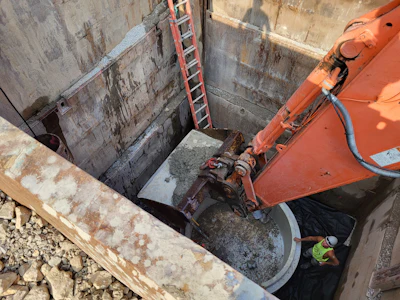
Burnett Township, Wis., is home to roughly 100 water users, with about 300 people served. Recently, the small community was awarded a grant from the U.S. Department of Agriculture (USDA) Rural Development (RD) to support a large-scale project that involved the installation of a new lift station and main sewer lateral.
“What made this project a priority is one of the hallmarks of our program,” said Steve Opatik, USDA RD State Engineer. “We’re serving rural communities, and our general focus is on keeping utility rates affordable and competitive with larger communities.”
Like other local rural communities, Burnett Township needed to make massive changes to its wastewater treatment facility to address new phosphorus limits, among other factors. Through an exhaustive planning process, they landed on the most effective solution to maintain the water system and best serve the township.
Stricter standards, higher stakes for wastewater facilities
Wisconsin is known for having stringent phosphorus limits. In 2010, the state enacted rules to limit phosphorus in state waterways to curb the growth of harmful algae blooms and keep water clean. The proactive move, as a Milwaukee Journal Sentinel article cites, was meant to “protect the waters that are such a key part of the state’s identity.”
Statewide, 0.75 milligrams per liter (mg/L) is a benchmark. That target, however, can become stricter based on a wastewater plant location, receiving water, and permit.
 Cedar Corporation
Burnett Township’s existing wastewater facility, a three-stage lagoon system, could no longer meet reduced phosphorus limitations set by the Wisconsin Department of Natural Resources (DNR). And so came the time for a system upgrade — in this case, a lift station sending wastewater from Burnett Township through a pipeline and into Beaver Dam’s collection system.
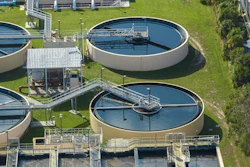
A similar scenario played out a few miles away in the rural community of Waupun. Waupun operates on the Rock River in the same part of the state with updated phosphorus levels, the discharge limits of which were set to lower than 0.05 mg/L. With the support of a USDA RD loan, the city was able to finance and open a new wastewater facility to modernize its operations and adhere to discharge limits.
Two converging challenges for rural wastewater systems
While phosphorus limits grow stricter in Wisconsin, there’s something to be said for the cycle aging water systems are in.
The majority of wastewater treatment facilities were either constructed or upgraded in the late 1960s or early 1970s. (Burnett Township’s facility was built in 1977.) Typically, there’s a 20- to 30-year timeframe during which a facility’s equipment starts to wear out, and the need for a major rehabilitation becomes clear.
“We’re in cycle number two, where a lot of communities have the phosphorus limits and are looking at the end of design life in wastewater rehabilitation projects,” Opatik stated. “Communities are having to take a hard look at their facility and ask, is it worth rehabbing one more time?”
As wastewater facilities and infrastructure age, so does the workforce. The EPA reports that about a third of the water sector workforce is approaching retirement age in the next 10 years.
A small rural town might have the same water operator for decades. When that individual retires, there are fewer operators available to readily fill that void. Building more resilient water systems helps communities prepare for these shifts.
Different paths for different communities
The Burnett Township and Waupun water projects are two examples of local municipalities that have shared goals and use different routes to achieve them.
In the words of USDA RD State Director Andrew Iverson: “In some instances, communities are making updates to their facility. In some instances, they’re choosing regionalization. Other times, they’re building a brand-new facility.”
The Burnett Township project is one of the larger regionalization projects the USDA RD has seen locally. Burnett Township decided the regionalization of their facility would be more effective for them in the long run versus upgrading their facility and, as Opatik notes, “they’ve made a really good decision for the long term.”
There has been a trend in the wastewater treatment community to look closer at regionalization, and the Wisconsin DNR likes to make sure municipalities consider it. However, as is the case in Waupun, there are projects where cities go with an alternative.
“You have to look at what’s most cost-effective and what’s going to provide the best service and product to that community,” Iverson stated.
Guidance for communities facing similar decisions
 Cedar Corporation
Iverson recommends talking with other communities and seeing what worked for them.
“See how they financed their project and the strategies they used, whether that was regionalization, rehabbing the facility, or building a brand new one,” he noted. “You’ll learn perhaps from some of the mistakes they made as well as some best practices.”
While echoing that same point, Opatik recommended reaching out to your local RD early on, even before considering the application process. For instance, if you’re planning to do a project that’s multi-year or multi-phased, Wisconsin’s USDA RD can provide input on funding packages and ways to break up a project that helps on the affordability side.
This type of knowledge sharing and input supports rural communities as they plan for wastewater projects and access funds to enable a more effective infrastructure.