 Photo: Kevin Bree
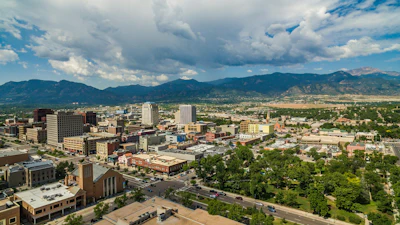
Colorado Springs, Colo., is growing by leaps and bounds. As the popular city continues to welcome new residents and businesses, Colorado Springs Utilities is tasked with the tall order of ensuring reliable utility services. As part of this initiative, they are in the first phase of a major wastewater expansion.
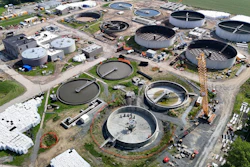
“The Eastern Wastewater System Expansion (EWSE) is necessary to serve our city well into the future,” says Tara McGowen, Manager of Water/Wastewater Engineering and Design. “The project is really a critical backbone that’s going to convey wastewater from the eastern portions of the city over to our Las Vegas Street Water Resource Reclamation Facility (LVSWRRF).”
The considerable project will do this by adding 11 miles of gravity mains, seven miles of force mains, and two lift stations at a price tag of $396 million.
Development of the east side of the city has ebbed and flowed since Banning-Lewis Ranch was annexed into the city in 1988. Today, it’s forecasted to have over 60,000 residents at completion, as well as schools, shops, and businesses.
In addition, the Peak Innovation Park, also on the east side of the city, began construction in 2021 and is planned to have 15 to 20 million square feet of commercial and industrial space, including a new Amazon distribution center.
Currently, the area is served by the existing wastewater infrastructure, but planners determined that the current system could reach capacity constraints by 2028. Engineers and planners began working on evaluating more cost-effective solutions to building an entirely new plant. The alternative that came out of those evaluations was the EWSE.
“This proposed alignment and choice to treat water at LVSWRRF stood out as the most efficient and cost-effective way for us to service the city,” explained McGowan.
One of the key factors in the decision was that LVSWRRF is permitted to process 75 million gallons per day (MGD) and is currently processing 30 MGD.
“We have the manpower, the land, capacity, and the permit at LVSWRRF, so it makes sense,” explains McGowan. An expansion of the LVSWRRF to increase from 30 to 50 MGD is planned further down in the phasing process.
Funding
In November 2024, the city council approved a 9% wastewater base rate increase annually for five years starting in Q1 2025, of which 5.5% is being used to fund the expansion.
This, along with bonds, will cover the upfront costs, and Springs Utilities says that fees to developers as homes and businesses connect to the system will recoup those costs, decreasing the need to increase base rates in the future.
Surveys
A project of this size is bound to come with challenges. However, the team is evaluating technological advancements to decrease disruption and increase efficiency. “One of the things I find really exciting is that we’re using drones to conduct surveys,” says McGowan.
Eleven miles of gravity mains and seven miles of force mains mean 18 miles of geotechnical investigations to find all the current utilities. “That’s a lot of man-hours to go out there and try to find all these utilities that we’re going to be in conflict with.”
Drones can fly over a site in many instances without putting people in the road, leading to better safety, more speed, and less disruption.
 Pathways for the interceptor and force mains and lift station locations for Phase 1 of the Eastern Wastewater System Expansion.
Land acquisition
Land acquisition is also a big challenge. “We’re doing 11 miles of gravity greater than 16 inches in diameter, so you have to go with topography. There aren’t a lot of options when you’re dealing with pipelines of this size,” explained McGowan.
To help limit the disruption, the team is evaluating trenchless technologies.
“Working around infrastructure such as golf course greens, roadways, drainage channels, and things of that nature is definitely a challenge,” she says. “To protect the integrity of the golf course and other significant infrastructure, we may have to use trenchless or reroute the pipeline around the entire site, which can be difficult when you’re talking about the gravity system.”
While trenchless can be more expensive, it’s not just landowners that benefit from the limited disruption—crews and the public benefit as well.
“We’re really leaning in and taking a very serious look at how we balance the cost of trenchless technologies with the value to our public and to our construction crews,” she says.
Communications
From the cost of the project to the siting of lift stations (which are visible) to the creation of new traffic patterns during construction, communication is critical.
“We are a not-for-profit municipal utility, and we highly value transparency,” says Jennifer Jordan, public affairs professional at Springs Utilities. “We find it effective if our customers feel like they’ve been listened to and that we’re communicating that we’re hearing them and wherever possible, adapting what we can.”
The large team of communicators ensures that public input and stakeholder meetings allow the community to be heard.
All together now
Several fast-growing western metros are wrestling with the same challenges Colorado Springs faces.
In Arizona, the Phoenix metro is planning multi-billion-dollar wastewater expansions to keep pace with rapid housing and semiconductor-driven growth.
Utah’s Salt Lake Valley utilities are likewise investing in larger reclamation plants as population growth and recurring drought tighten supplies.
Along Colorado’s Front Range, cities like Fort Collins and Denver Water are expanding treatment and storage capacity to match booming suburbs and a warmer, drier climate.
Colorado Springs’ EWSE is part of this broader western trend: build capacity now to stay ahead of growth while protecting scarce water resources.
Much of the construction will take place within an already developed city, which means working around the existing infrastructure.
“We’re dealing with water mains, telecommunications, stormwater, electricity, and gas. We need to determine how to maneuver through all this established infrastructure. That poses a significant challenge,” remarked McGowan.
The extensive coordination will go well beyond the planning. Not only will the team need to ensure the public remains mobile throughout construction, they must also work with and around other significant construction projects as multiple services expand to meet growing demand.
Luckily, all the people and complexity are exactly what McGowan loves. “I’m an extrovert. What excites me the most about this project is all the people it takes to deliver something like this.”
The project is projected to be completed in 2030.