The first light hits the rolling hills of eastern Tennessee as a small group of operators gathers around a pickup at the Oostanaula Wastewater Treatment Plant. They call it a “tailgate meeting,” a quick daily check-in before the workday begins.
This ritual is casual, but the conversation is serious. Every morning, operators from both of Athens Utilities Board’s wastewater plants trade updates, talk through maintenance priorities, and make sure no detail is missed.
“Most folks come to work as an eight-hour job, but we’ve built a culture that this is more of a career,” says John Sullivan, who’s been with AUB for nearly 24 years. “Our team is in it for the long haul.”
That mindset has propelled AUB to a rare level of consistency. The utility’s two plants—Oostanaula and North Mouse Creek—have logged decades of permit compliance and earned a long string of awards from the state. Earlier this month, North Mouse Creek earned the Operational Excellence Award from the Kentucky-Tennessee Water Environment Association (KY-TN WEA) for the 29th consecutive year, while Oostanaula notched its 20th straight award—a milestone for the larger, more complex facility.
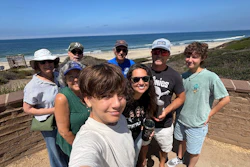
 Photo: Athens Utility Board
The award recognizes facilities that maintain full compliance with NPDES permit requirements, allowing no more than one violation over a 12-month period.
Across the decades, the AUB team has proven its dedication to the work.
Two plants, one standard
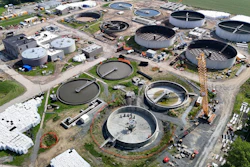
Oostanaula came online about 20 years ago with a design flow of 6 million gallons a day (MGD) and an average flow of 2.2 MGD. At peak, it can handle roughly 15 MGD. The facility runs an oxidation ditch process and, notably, turns its biosolids into a registered fertilizer called Athena Grow, used by local farmers.
North Mouse Creek, built in 1995, is smaller, designed for 1.2 MGD and averaging 0.8 MGD with a peak of about 5 MGD. Like its sister plant, it runs an oxidation ditch and relies on a SCADA alarm system when operators aren’t on site. Solids from Mouse Creek are hauled to Oostanaula for dewatering and drying.
Building a career, not just a job
The backbone of AUB’s success is a workforce culture that sees wastewater operations as a profession, not just a paycheck.
“Our operators do an apprenticeship program. It’s a two year program. They take four tests. Within that program, they get criteria from Sacramento State, California, they do three volumes of their wastewater program, and that’s all in preparation for their Grade IV license with the state of Tennessee,” explains senior operator Jody Derrick.
Each apprentice is immediately part of the broader AUB team. “And they also have a mentor which is a Grade IV operator that helps them through all that process,” Sullivan adds.
The utility even rewards the pursuit of advanced licensing.
“Another thing is that a lot of wastewater plants only have maybe one certified operator or two. And AUB wants all of our operators to pursue getting their license. They get compensation for their license, too. That also makes this job more appealing,” Sullivan says.
Recruitment is strong despite industry-wide hiring challenges. As supers across the industry grumble about the talent pool in their respective regions, the AUB team reports a steady stream of interest for water and wastewater jobs. Derrick points specifically to Fleming Training Center in nearby Murfreesboro, which has been a longtime education partner for utilities like AUB–especially as demand has risen in the past few years. Now, applicants are coming in droves with the early-stage resumes to prove themselves.
“There have been more applications for this job than there has been for the lineman job. We do power, water, sewer and gas,” Sullivan says.
What was once an entry-level role is now a career path.
“Used to be that this was the entry level position. You get your foot in AUB’s door and then you move on up. But again, the culture has changed,” Sullivan says.
Innovation without chemicals
The plants’ technical achievements match their culture. In a state where many facilities still rely on chlorine gas, AUB was early to adopt UV disinfection. And in 2016, the team began removing phosphorus biologically—without adding chemicals.
“We’ve done our phosphorus removal biologically. No chemical additions during that time. We use some fermented sludge during the warmer parts of the summer to help us just a little bit,” Derrick says with evident pride.
That effort has gone even further.
“For the last two years we have not used any polymer on this plant. We’re always proud if we’re not making any additions to the plant other than what it can do biologically,” Derrick says.
This chemical-free optimization is crucial as the team looks ahead to the next regulatory wave. As younger talent fills out the ranks of plants like North Mouse Creek and Oostanaula, what new challenges will arise? It won’t be the same game that Sullivan and Derrick confronted; best practices will always remain true, but new demands from the EPA and the broader market will emerge, no doubt.
Preparing for the next generation
Derrick (~22 years), Sullivan (~24 years), and their colleague Russell Coleman (~27 years) plan to retire within three years. Rather than coast to the finish line, they are laser-focused on preparing the next generation.
“The number one thing is we don’t want to leave them in a bad way,” Sullivan says.
Part of that intent is to get talented people in the door, but the bigger challenge is to demonstrate the intangibles of the job–the stuff that isn’t in the textbooks. How an individual plant behaves. How a specific state regulatory agency interacts with utilities. How a customer base approaches funding efforts. It’s a complex job.
“We’ve always told them that just because you got your Grade IV license doesn’t mean your studying is finished. You will continue that all the way through your career here,” Sullivan says.
The philosophy is simple: share everything you know.
“We are very fortunate that the younger guys are like-minded with us in the fact that we want to protect not just the revenue stream, but the public’s health,” Derrick says.
Knowledge shared, community protected
AUB’s team doesn’t operate in isolation. They attend quarterly Tennessee Water and Wastewater Association meetings to exchange lessons learned and earn continuing education credits. Their attitude is one of open collaboration, because a stronger industry means a healthier community.
As the morning tailgate meeting breaks up, the sun now higher over Athens, the next shift of operators heads into the plant. The senior leaders will eventually step aside, but their influence is built to last.
The culture they’ve cultivated—of career-long learning, technical innovation, and stewardship of both people and environment—ensures that Athens Utilities Board’s record of excellence will endure.